
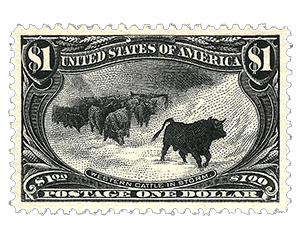
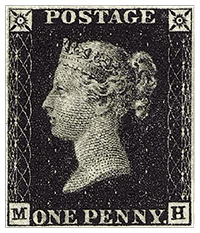

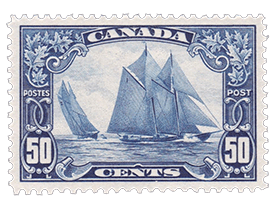










The 2027 Scott Standard Postage Stamp Catalogue is now complete. All six volumes have been released, and the full set is shipping from dealers. For collectors who price United States material against Scott numbers, the volume that matters is Volume 1, and it has been available since March 2026.
The release schedule, volume by volume
Scott publishes the Standard catalogue in stages rather than as a single shipment. The 2027 edition rolled out across six months in 2026. Each volume is issued as two physical books, parts A and B, which brings the full edition to twelve books and more than 10,000 pages according to Canadian Stamp News.
| Volume | Countries covered | Release |
|---|---|---|
| Volume 1 | United States, United Nations, countries A and B | March 2026 |
| Volume 2 | Countries C through F, including Canada | April 2026 |
| Volume 3 | Countries G through I | May 2026 |
| Volume 4 | Countries J through M | June 2026 |
| Volume 5 | Countries N through Sam | July 2026 |
| Volume 6 | Countries San through Z | August 2026 |
A United States collector needs one volume out of the six. Volume 1 carries the United States listings alongside the United Nations issues and countries from Afghanistan through Burundi. Ordering Volume 1 supplies both parts, 1A and 1B. The 2027 edition is credited to editors Jim Kloetzel, Jay Bigalke and Chad Snee, and Volume 1 carries ISBN 9781971289038.
What Scott has said about the changes, and what it has not
Scott describes the 2027 edition in the same terms it applies to every annual revision: thousands of value changes, hundreds of new listings, and editorial updates throughout. No figure specific to the United States section has been published. Scott has not released a count of how many United States values moved, in which direction they moved, or which issues were repriced.
That absence is worth naming plainly. In previous years the philatelic trade press published a what-is-new overview of Volume 1 shortly after release, covering specific United States repricing and any structural changes to the listings. No such overview of the 2027 Volume 1 has appeared. The 2027 edition also keeps the existing format and volume organization, so the practical difference from the 2026 edition is confined to values and listings rather than to how the catalogue is arranged.
Collectors who want to know what changed in the United States section therefore have one reliable method available, which is comparing a 2027 Volume 1 against a 2026 copy directly. Anyone who performs that comparison on a specific issue or series is welcome to post the findings in the Stamp Collectors community, where other collectors can check them.
What the 2027 set costs
The publisher list price for the complete six-volume set is $959.54. Discounting is normal in this category once a full edition is out. The dealer iHobb lists the complete 2027 set at $699.95 and marks it in stock for prompt shipment, which is roughly 27 percent under list.
Availability varies by dealer rather than being uniform. Amos Advantage, the retail arm connected to the Scott titles, shows Volume 1 on backorder with no estimated receipt date and displays no price on the product page. Independent dealers are showing stock. Per-volume pricing differs enough between retailers that a collector buying only Volume 1 should compare several before ordering.
How to read a Scott value once the new edition arrives
A new catalogue edition tends to produce a predictable round of disappointment, because a Scott value is not a price. Scott values describe a retail asking price for a stamp in the stated grade and condition, bought from a dealer who has already graded, mounted and guaranteed it. The figure a collector receives when selling is a different number, set by what a buyer will pay for that specific stamp in its actual condition on the day.
Three factors separate a catalogue value from a realized price. Condition carries most of the difference, since centering, gum, cancellation and faults move a stamp across several price tiers. Volume carries much of the rest, because common issues in large supply trade far below catalogue regardless of what the listing states. The remainder is the dealer margin built into any retail figure.
The practical use of a new edition is relative rather than absolute. A value that moved upward signals increased demand or decreased supply for that issue, and that signal holds even when the stated figure overstates what the stamp would fetch at sale. Reference material on this distinction is collected on the stamp values page, and a fuller explanation of how the numbering and valuation system works is available on the Scott stamp catalog page.
Whether the 2027 edition is worth buying
For an active United States collector who buys and sells regularly, Volume 1 is a working tool and an annual replacement is defensible. For a collector cataloguing an inherited holding or working through an album at leisure, a 2026 or even a 2025 Volume 1 will identify every stamp correctly and will place values within a range close enough for that purpose. Scott numbers do not change between editions. Values move, but they move at the margins.
Collectors preparing to sell face a different calculation, since an outdated catalogue affects negotiation rather than identification. A current edition is useful there, though an independent assessment of the material matters more than the catalogue figure. Guidance on that process is set out on the stamp collection appraisals page.
We will update this report if Scott or the trade press publishes a United States specific breakdown of the 2027 value changes.









Ask A Question Or Leave A Comment