
This free Stamp Identification App provides an easy way to identify your stamps. All you need to do is describe your stamp!
If you can’t find the stamp you are looking for on this page, try posting it in the Collectors Community to get help identifying it!
Start Here
Describe Your Stamp
Description Examples
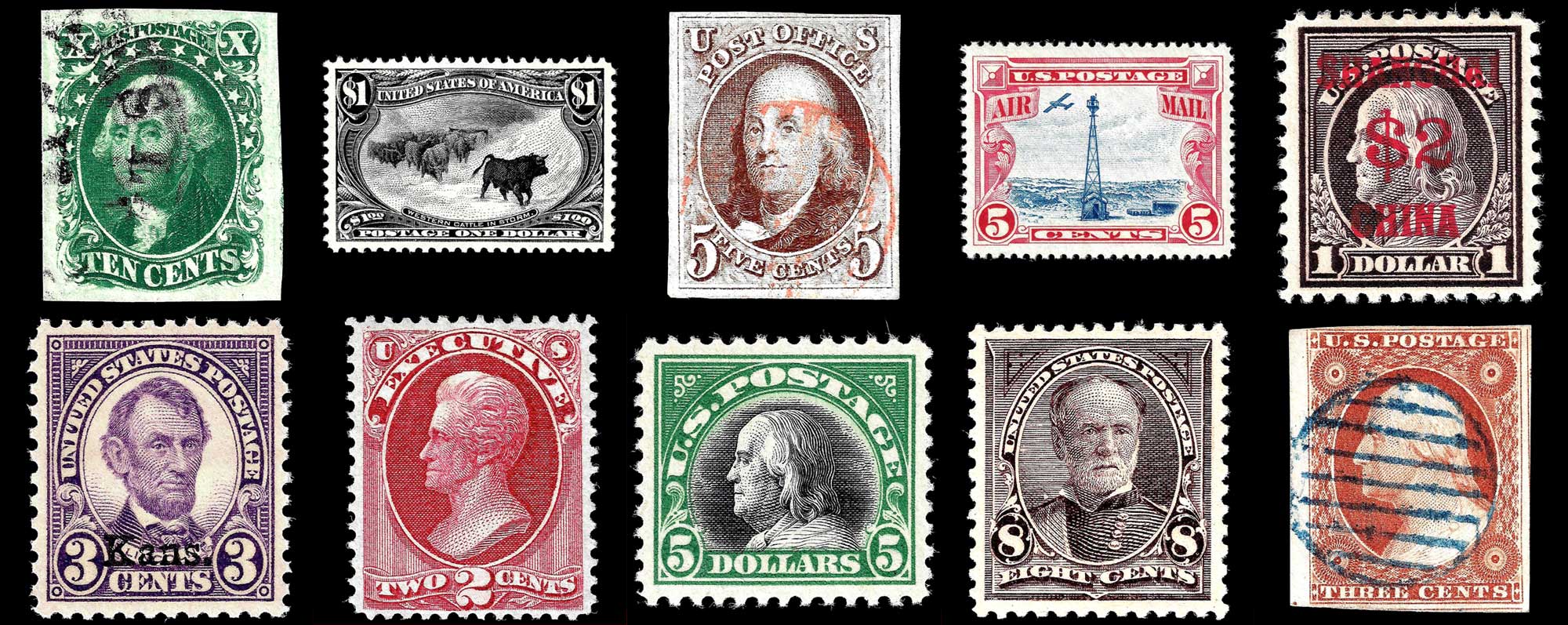
1c blue franklin facing right | purple train three cent stamp | 5 cents brown portrait of a man | red eagle with blue flags | reddish orange george washington | united states postage text with horse two cents
If you can’t find the stamp you are looking for, that doesn’t mean you can’t find it’s value! You can view the full list of stamps that have values here.
How a Stamp Identification App Helps Collectors Identify Stamps Faster
A stamp identification app gives collectors a faster way to figure out what stamp they are looking at without relying entirely on printed catalogs, forum posts, or long manual searches. For many collectors, the hardest part of organizing a collection is not storing the stamps. It is identifying them accurately enough to know what they are, where they belong, and whether they deserve more research.
That is where a text-based stamp identification tool becomes useful. Instead of requiring the user to upload or scan anything, the app allows collectors to describe the stamp using visible details. A user can enter information such as the country name, color, denomination, portrait or subject, wording on the stamp, shape, and approximate age. Based on that description, the app can narrow down possible matches and help the collector move much faster through unknown material.
For collectors sorting inherited albums, dealer lots, mixtures, or loose worldwide stamps, this kind of tool can remove a major barrier that often slows down the hobby.
Why a Text-Based Stamp Identifier App Makes Sense
Not every collector wants to stop and photograph each stamp while sorting a box or album. In many cases, it is faster to simply describe what is in front of you. If a stamp says “Postage,” has George Washington on it, is green, and has a one-cent denomination, those details can already narrow the possibilities significantly.
A stamp identifier app built around text descriptions works especially well because collectors naturally identify stamps this way already. Most people begin by noticing the country name, then the person or design, then the denomination and color. Experienced collectors often also notice clues such as whether the stamp appears engraved, modern self-adhesive, commemorative, definitive, or overprinted.
This type of app mirrors how collectors think. Instead of forcing a technical workflow, it allows users to describe a stamp in ordinary language and receive likely matches based on those details.
What Information a Stamp Identifier App Can Use
A strong stamp identification app should be able to work with the kinds of details collectors can easily observe. That includes the country or language shown on the stamp, the denomination, the primary color, and the central design.
For example, a collector might type something like: “Blue United States stamp with George Washington, 2 cent denomination, older style design.” Another user might describe a stamp as: “Red Canada stamp with Queen Elizabeth, says postage, small definitive.” Even if the description is not perfect, the app can still use those clues to narrow down likely candidates.
Text-based identification becomes even more useful when the app can interpret alternate spellings, partial wording, historical country names, and common collector terminology. A user may not know whether a stamp is a definitive or a commemorative, but the app should still understand descriptions such as “plain everyday issue” or “special event stamp.”
Why This Is Useful for Beginners
New collectors often struggle because they do not yet know how to search a catalog efficiently. They may not understand what details matter most, and they may not know the difference between a country name, a monarch name, a denomination, and a series title.
A stamp identifier app can bridge that gap by turning basic observations into useful identification results. This helps beginners stay engaged with the hobby rather than feeling stuck every time they encounter an unfamiliar stamp.
It also helps when a collector inherits a family album or a box of worldwide stamps and wants to sort through it in a more organized way. Instead of giving up because everything feels too confusing, they can describe one stamp at a time and begin building familiarity through repeated use.
Over time, many collectors naturally learn more from the process. They begin to recognize common issues, design types, and countries more quickly because the app reinforces those patterns.
Why Experienced Collectors Still Benefit
A stamp identification app is not only for beginners. Even advanced collectors come across unfamiliar material, especially when dealing with worldwide collections, estate lots, foreign mixtures, or unusual back-of-the-book items.
An experienced collector may already know how to identify most United States or British Commonwealth stamps, but may still want a quicker way to sort early Latin American issues, classic European definitives, or modern topical material from dozens of countries. In those cases, a text-based identifier can act as a shortcut before deeper catalog verification.
It can also help with rough sorting. When working through large quantities of stamps, speed matters. An app that can quickly narrow a stamp to a country, era, and probable issue type can save a substantial amount of time.
What to Look for in the Best Stamp Identifier App
The best stamp identifier app should do more than return a random guess. It should provide likely matches in a way that helps the collector verify the answer. That means offering useful descriptions, relevant issue details, and enough context to distinguish between similar stamps.
A strong app should also understand incomplete descriptions. Collectors will not always know the exact wording, year, or subject. The app should still be able to work with partial information and refine results intelligently.
Another important factor is whether the app helps users move from identification into organization. Once a stamp is identified, the collector should be able to keep track of it in a practical way. That may include saving notes, grouping stamps by country or topic, or using the identification as a starting point for collection inventory.
The most useful stamp identification app is one that fits naturally into the collecting process rather than interrupting it.
A Stamp Identifier App Can Make the Hobby More Accessible
One reason stamp collecting feels overwhelming to many people is that identification often seems too technical at the beginning. Printed catalogs are still valuable, but they can feel intimidating when someone is staring at hundreds of unfamiliar stamps and does not know where to start.
A stamp identifier app makes the hobby more approachable by reducing that first layer of uncertainty. It allows users to start with what they already know and build from there. A collector does not need expert terminology to begin. They only need to describe what they see.
That simple shift can make a major difference. It turns stamp identification from a frustrating obstacle into a more manageable part of collecting, organizing, and learning.