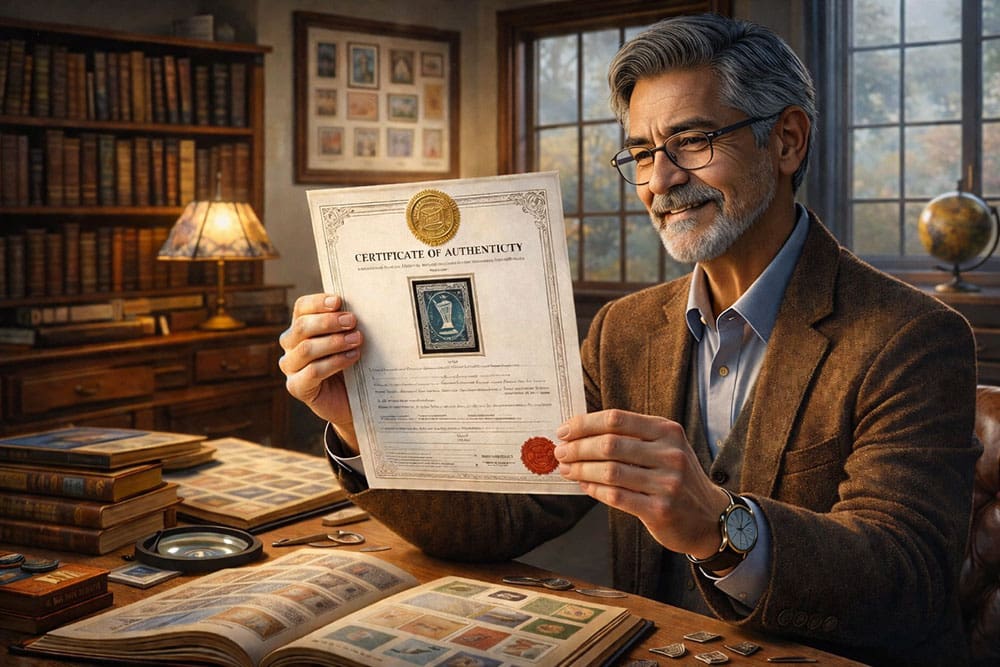
If you want to certify stamps for resale, insurance, building a serious collection, or simply peace of mind, professional expertizing is the standard path. A certificate from a recognized expertizing service can confirm whether a stamp is genuine, identify repairs or alterations, and document key details like grade, centering, gum condition, and faults.
This article explains what stamp certification is, when it matters, how the process works, and how the major U.S. expertizing services differ—starting with PSE, then PF, APS, and PSAG.
Top 4 Stamp Certification Services
Here is a list of the most trusted and popular stamp certification and expertization services:
1. Professional Stamp Experts (PSE)
PSE is widely used by collectors and dealers who want a certification that addresses authenticity and also includes a structured evaluation of quality for U.S. and many worldwide stamps. PSE is especially associated with graded certification for stamps, which can matter in the top end of the market where centering and condition premiums are large.
What PSE Is Known For
- A strong emphasis on U.S. material
- Clear opinions on authenticity and condition
- Grading for stamps where centering and condition are major value drivers
- A format that many buyers recognize quickly in online and auction settings
When PSE Makes the Most Sense
- You want to certify stamps that have meaningful value differences tied to centering and condition
- You are buying or selling material where the market expects a grade-based discussion
- You want a certificate that supports premium pricing on top-quality examples
What to Expect From a PSE Certificate
Depending on the submission, the certificate typically documents identification and authenticity, notes faults and alterations when present, and may include a grade assessment when requested and applicable.
2. The Philatelic Foundation (PF)
The Philatelic Foundation (PF) is one of the most recognized expertizing bodies in the United States, particularly for classic and specialized material. Many collectors and auction buyers rely on PF opinions for U.S. classics, rare stamps, and items that require careful expert analysis.
What PF Is Known For
- Strong reputation in expertizing classic U.S. and higher-end material
- Detailed opinions valued by advanced collectors and the auction market
- A focus on whether the item is genuine and whether it has been altered or repaired
When PF Makes the Most Sense
- You are dealing with classic U.S., rarities, or complicated identification issues
- You want a widely accepted certificate for material that may be sold through auctions or specialist dealers
- You need a high-confidence opinion for items that are frequently faked or altered
What to Expect From a PF Certificate
PF certificates typically emphasize authentication and detection of repairs or alterations, with descriptions aimed at clearly stating what the item is and what has been found.
3. American Philatelic Society (APS)
APS Expertizing is part of the American Philatelic Society’s broader mission and is frequently used by collectors who want reliable expert opinions across a wide range of U.S. and worldwide material. APS submissions can be a practical choice for many everyday certifications, as well as for material where a third-party opinion is needed before upgrading a collection.
What APS Is Known For
- Accessibility for collectors, including those certifying stamps for the first time
- Coverage across U.S. and worldwide material
- A structured expertizing program tied to a large collector organization
When APS Makes the Most Sense
- You want to certify stamps without focusing on top-end grade premiums
- You need authentication and fault/alteration detection across a broad range of countries and issues
- You want a straightforward, recognized opinion for collection building or resale
What to Expect From an APS Certificate
APS certificates generally focus on identifying the item and giving an opinion on genuineness and condition, noting faults or alterations when found.
4. Professional Stamp Authentication & Grading (PSAG)
PSAG is known in the marketplace for providing authentication and grading services, offering an option for collectors and sellers who want a combined authenticity opinion and a formal grade presentation. This can appeal to buyers who prefer standardized grading language, especially when comparing similar stamps across listings.
What PSAG Is Known For
- A focus on authentication and grading presentation
- Certificates designed to help standardize how stamps are compared in the marketplace
- An approach that can be useful for sellers who want clear, consistent listing language
When PSAG Makes the Most Sense
- You want to certify stamps with a grading-oriented sales strategy
- You sell online and want a standardized way to communicate quality
- You want a format geared toward quick buyer interpretation
What to Expect From a PSAG Certificate
PSAG certificates typically present authentication findings along with grading-related detail when applicable, giving buyers a quick way to understand both legitimacy and quality.

What It Means to Certify Stamps
To certify stamps means submitting them to a professional expertizing organization that examines the item and issues a written opinion. The result is typically a formal certificate that describes the stamp and the expert opinion on:
- Authenticity (genuine or not)
- Condition (faults like thins, tears, creases, short perforations)
- Alterations (regumming, reperfing, added cancels, cleaned surfaces, repairs)
- Identification (correct issue, shade, watermark, perforation, printing, variety)
- Quality (centering and overall eye appeal, depending on the service)
Certification matters most when a stamp’s value changes dramatically based on authenticity or condition, or when the stamp is often counterfeited, altered, or misdescribed.
When You Should Certify Stamps
Some stamps swing from “nice collectible” to “major money” depending on tiny details. If a small difference in perforation, watermark, shade, grill, or gum condition changes the catalog value, certification becomes practical.
Stamps Commonly Altered or Counterfeited
Many classic U.S. issues and higher-value worldwide stamps are frequent targets for repairs, regumming, reperfing, and forged cancels. If the item is a popular target, you should assume the market will ask for a certificate.
Online Selling and Buyer Confidence
When you sell online, buyers cannot hold the stamp up to light, study the perforations, or check the paper surface. A recognized certificate reduces buyer uncertainty and can raise realized prices, especially for stamps that would otherwise require trust.
“Looks Too Good” Situations
A stamp that appears unusually clean, perfectly centered, or surprisingly inexpensive for what it seems to be is a prime candidate for certification.
What Expertizing Does (and Doesn’t) Guarantee
- Confirm genuineness
- Identify faults and alterations
- Clarify the exact variety or issue
- Provide a recognized, documented opinion
What a Certificate Can’t Do
- Guarantee future resale price
- Prevent all disputes over subjective eye appeal
- Replace learning basic stamp evaluation
- Make a damaged stamp “better” than it is
Expertizing is a powerful tool, but it works best when you understand what you’re submitting and why.
Step-by-Step: How the Stamp Certification Process Works
Step 1: Choose the Right Expertizing Service
Different services have different strengths, specialties, and certificate formats. The best choice often depends on what you collect and what kind of opinion you need.
Step 2: Prepare the Stamp Properly
Handle stamps with tongs and avoid unnecessary touching. If the stamp is mint, keep it protected and do not mount it on anything that risks gum disturbance. If it’s on cover or piece, keep the item intact—removing stamps from covers can destroy evidence and value.
Step 3: Submit Using the Service’s Forms and Packaging Guidelines
Each service requires a submission form describing the item and the service level you want. Pack the stamp securely so it won’t shift in transit. The goal is to prevent bending, scuffing, gum disturbance, or corner damage.
Step 4: Examination and Expert Review
The service will evaluate authenticity and condition. Depending on the item, they may confirm watermarks, perforation measurements, paper type, printing method, cancellation characteristics, and signs of alteration.
Step 5: Receive the Results and Certificate
The outcome may be favorable (genuine as described), unfavorable (not genuine or altered), or genuine with faults noted. Many collectors find that even an unfavorable outcome is valuable—because it prevents a costly mistake from lingering in a collection or inventory.
Understanding Common Certification Outcomes
Genuine, As Described
The stamp matches the claimed issue and shows no disqualifying problems beyond anything stated on the certificate.
Genuine With Faults
The stamp is real, but condition issues are recorded. Faults can impact value significantly, and having them disclosed on a certificate makes later transactions clearer.
Altered
A stamp can be genuine but altered in a way that affects collectible status or value, such as regumming, reperfing, repaired tears, added margins, cleaned cancels, or pressed creases.
Not Genuine or Misidentified
This includes outright counterfeits, stamps with forged cancels, wrong perforation/watermark/shade claims, or items assembled from parts.
How to Choose Between PSE, PF, APS, and PSAG
Match the Service to the Stamp Type and the Market
- If you are certifying classic U.S. stamps, rarities, or complicated issues where the market expects a heavy emphasis on expert authentication, PF is commonly chosen.
- If you want strong U.S. expertise and grading where centering premiums matter, PSE is often a leading choice.
- If you want broad coverage and a practical, recognized opinion for many collecting areas, APS is a common fit.
- If your selling style relies on standardized grading presentation and you want certificates that support that approach, PSAG can fit that purpose.
Think About Your Goal
- Certify stamps for personal confidence: focus on a recognized opinion that clearly states authenticity and faults.
- Certify stamps for resale: consider what buyers in your niche expect to see.
- Certify stamps for premium pricing: grading-focused certification can matter more for stamps where condition premiums are strong.
Tips to Save Money and Avoid Submission Mistakes
Pre-Screen Before You Submit
Use basic tools first: watermark tray, perforation gauge, magnification, and strong lighting. If you can rule out the stamp being the claimed variety, you avoid unnecessary fees.
Submit the Right Item Format
Do not remove stamps from covers or pieces if the postal history context matters. Many authenticity questions depend on the full artifact.
Be Realistic About Outcomes
Certification is not just for “winning.” It is for certainty. Sometimes the best value of expertizing is learning that a stamp is altered, repaired, or misidentified before it becomes a costly problem.
Keep Certificates Organized
If you plan to sell later, store certificates with the items and record certificate numbers and descriptions in your inventory system. Buyers often want the paperwork immediately, and missing paperwork can reduce confidence.
What Happens After You Certify Stamps
Once you certify stamps, you have a documented expert opinion that can guide how you store, insure, sell, or upgrade the item.
- For collectors, certification helps define what you own.
- For sellers, it strengthens listings and reduces disputes.
- For buyers, it creates confidence that the stamp is accurately represented.
If you are building a collection with serious value or selling higher-end material, expertizing is one of the clearest ways to protect your money and your reputation—because the stamp market rewards certainty.