
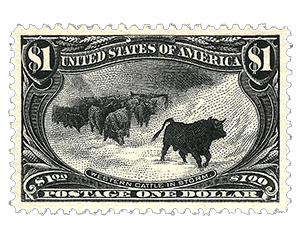
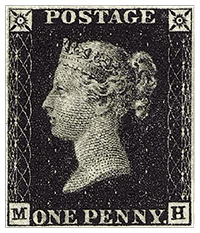
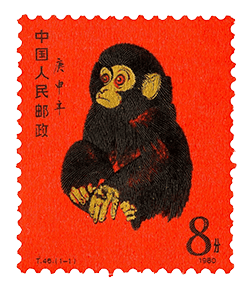
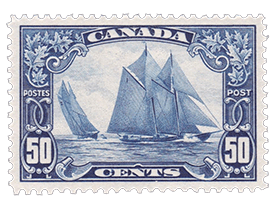





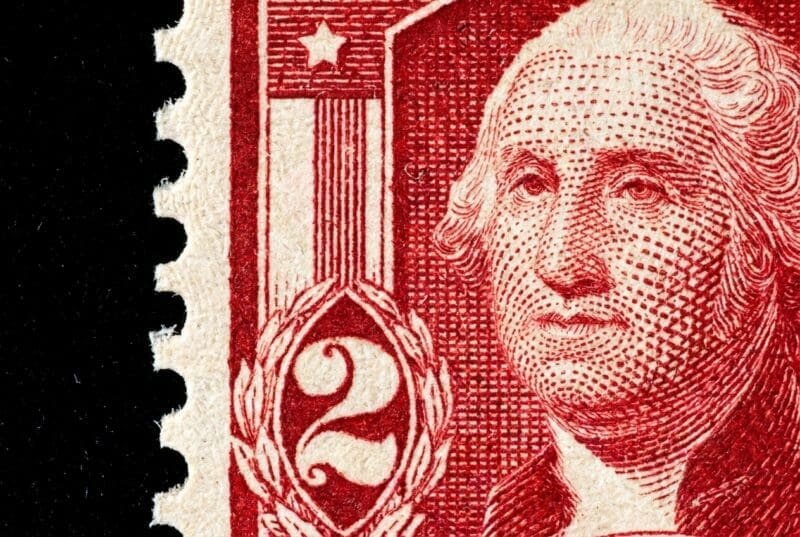
Our stamp value lookup uses Scott numbers. That’s great for people who already know their stamp’s number. But most of the people who come to our site don’t know their stamp’s number. They have a stamp in a glassine envelope or in a shoebox from a relative’s house. They want to know the value of their stamp. Right now, we can’t give them a dollar amount because the value is listed in a catalog and not attached to a picture of the stamp.
This guide covers the initial step before any other on this site, ours included: determining which catalog listing your stamp belongs to. We have listed these in order of least expensive and least damaging to the most expensive and most damaging to the stamp.
Why identification has to come before valuation
Value in stamp collecting is measured against a catalogue entry for a single issue, which lists the date, the denomination, the design, the paper, the perforation gauge and the method of printing. All auction prices, all dealer prices and the Fair Market Values on this site are related to the single number in the catalogue, whereas a description of the design is not related to any entry, as there may be dozens of entries with the same design. In their published guide Mystic Stamp Company writes: “Two stamps can look the same, and yet are different issues with different Scott numbers and greatly differing values.”
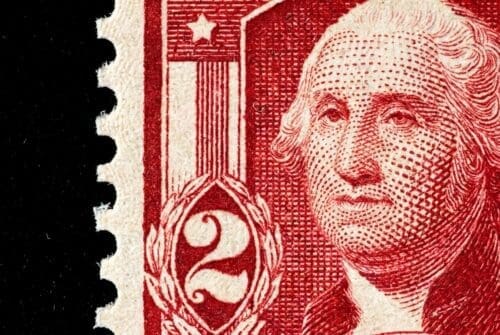
That guide illustrates the problem with the US Washington definitive stamps Scott 599 and Scott 599A. The only difference between these two stamps is the weight of two lines in the hair of Washington on the stamp. The Type I stamp is listed at 35 cents for a mint stamp. The Type II stamp is listed at 120 dollars for a mint stamp. That is a near-microscopic difference between two prices more than two orders of magnitude apart. Catalog browse pages for this site are arranged in the same way with issues of US stamps listed under headings that identify the characteristic that distinguishes the stamps in the listing, rather than by the design of the stamps, such as “1894 | Perf 12 | Unwatermarked” against “1895 | Perf 12 | Watermark 191 Double Line USPS”. So a value read at the design stage is a value read from the wrong row.
The order of operations
Identification is a series of decisions that narrow down possibilities. Each decision in the series is dependent upon the previous decision.
Step 1, the country. The American Philatelic Society describes catalogs as usually arranged by country, then by stamp type and issue date, so a stamp with no country assigned cannot be looked up.
Step 2, the denomination and the design. The denomination is the number and currency unit printed on the stamp and the design is the main picture, the frame, the wording, the shape and the number of colors used in the stamp. The American Philatelic Society states that the denomination and the number of colors used in printing a stamp give an approximate idea of the date of issue.
Step 3, the catalogue listing that covers the design. A design can be listed once, as a run of listings in an issue, or even as listings in issues decades apart. Many stamps can be fully identified at this point as a design is only used once and so belongs to one listing.
Step 4, the criteria that separate listings sharing a design. Where a design has been reused, the physical characteristics of the item will determine which listing applies. The criteria for separation are perforation, watermark, paper, gum, printing method and color shade.
The routine that was published by Stamp Smarter for the Washington and Franklin issues, which are some of the hardest United States series to resolve, is shown in order of the design and denomination of the stamps, then the perforation, the printing process, the watermark, and the type of stamp.
When the inscription is in an unfamiliar language or script
A stamp inscribed in Cyrillic, Arabic, Hebrew, Chinese or Devanagari does not immediately answer step 1 of identification. Stamps with country names in languages other than English are also not immediately identified. The American Philatelic Society warns that the country name “will not necessarily appear in English or even resemble the English name.” A stamp identifier is a reference which lists the text on a stamp and the country or countries to which that text refers. The reference is organized by the lettering on the stamp rather than by country name.
Three things need to happen for the above to work. First, the text as printed must be recorded exactly as printed before any translation is attempted. Second, the currency unit must be recorded separately from the numeral because names such as kopeck, para, centavo, anna and piastre narrow the candidate countries while the country name is still unread. Third, the overprint must be recorded separately from the wording beneath the overprint because overprints often name a different postal authority, a new currency or a change of political status of the country. To these, the Association of British Philatelic Societies adds one more clue for modern material: the date of issue, printed in very small figures somewhere in the design.
The stamp with no country marking at all
One category of stamp names no country, and the missing name is itself the identification. The American Philatelic Society states the rule and the single exception: “With the exception of Great Britain all postage stamps must have the name of the country of issuance on them.” This is because Great Britain was the country that issued adhesive postage stamps before any other postal administration. Thus, the name of the country of issuance is not required on Great Britain postage stamps and instead the stamp may simply have a silhouette of the ruling monarch on it. Thus, a stamp with the head of a sovereign, a denomination, and no name of the country on the stamp anywhere, is a Great Britain issue. A monarch’s portrait alone, however, does not make a stamp a Great Britain issue, for Commonwealth administrations also printed the head of a monarch on stamps bearing the name of the country of issuance.
The six separating criteria
Perforation measurement
Perforation is measured with a perforation gauge by counting the number of holes or teeth along a fixed edge, and Mystic Stamp Company’s published instruction expresses the result as the number of holes or teeth per two centimeters of edge. The measurement is expressed as “perf 11” for a stamp with 11 holes in two centimeters of edge, for example. The perforation gauge is slid along the edge of the stamp until the printed design matches the holes in the gauge. If there is a partial match, the correct gauge has not been found. Measurement of the horizontal and vertical edges is required because compound perforations are measured differently on the horizontal and vertical edges.
Watermark
The Smithsonian National Postal Museum defines a watermark as “a pattern or design within the substance of the paper which is impressed in the wet paper pulp.” It is used on stamps to prevent them from being counterfeited. United States watermarks are letters. Modern United States stamps do not have watermarks, so looking for watermarks is more relevant for older material. To look for watermarks, Stamp Smarter suggests you hold the stamp in tongs and look at it under strong light from various angles. If you can’t see any watermark, then you can look for it in a watermark tray. You must dip the stamp face down in the watermark fluid. Never dip a stamp in water.
Published cautions tend to focus on the watermark check more than any other criteria. Stamp Smarter first warns that hinges must be removed before placing a stamp in a tray. Stamp Smarter also notes that many a stamp has been damaged by careless hinge removal, and it warns separately about heat damage from the light source. Other features such as thins, creases, gum lines and heavy cancellations can be mistaken for a watermark. A walkthrough on how to detect stamp watermarks can be found on this site.
Paper
Catalog listings often use paper type as a key detail in browse headings, mentioning examples like thin bluish wove paper, hard white paper, soft porous paper, and yellowish wove paper to distinguish items. To identify the paper, people check its color against a white background, feel its texture, note its thickness, and hold it up to the light to judge how translucent it is. All of this is done without soaking it or using any solvents.
Gum
Gum is the adhesive on the back of unused stamps. Gum appears in the browse headings alongside paper, and the 1875 re-issues are identified in part by white crackly gum. Three states need to be told apart: original gum from the printer, no gum, and gum added by some third party. Gum is examined under angled light for texture, sheen and the pattern of crackle. Moisture is avoided.
Printing method
Printing method refers to different ways in which listings share a design but vary in how the ink gets to the paper. Stamp Smarter provides a test for identifying the printing method of engraved United States stamps that can be conducted with no equipment. Engraved stamps have raised ink that can be seen by tilting the stamp at a sharp angle to the light. On the other hand, an offset printed stamp has ink that lies flat and the color of the ink almost disappears when viewed at the same angle. A foil rub can also provide evidence of the printing method used for a particular stamp. For engraved printed stamps, the frame of the portrait oval will transfer to the foil, whereas for offset printed stamps it will not.
Color shade
Color shade carries weight in the catalogue, but it is the least reliable criterion here, because color changes over a century of handling. Stamp Smarter records that light exposure reacts with reds, oranges and yellows ahead of other colors, that used stamps may have been soaked in bleach, chlorine or dishwashing liquid, and that dyes from backing papers tint a bath and transfer to the stamps. These stamps are called color changelings, and the conclusion is blunt: the majority of the time a stamp in an unexpected color is a changeling rather than a rare variety. A stamp that still looks like a genuine variety belongs with a certifying organization able to tell a true error from a changeling, a process covered on this site under stamp certification.
The order to attempt the six criteria in
While cost and risk increase dramatically across the six categories of criteria, the order in which you try each is extremely important. All design detail, inscription detail, and shape can be determined without any additional cost or stress to the stamp. Perforation measurement can be made with only one inexpensive gauge. The backlight watermark check, the angled light printing test, and the paper and gum tests cost nothing and require only patience. Watermark fluid tests introduce a consumable, a container, and a handling procedure. It is because of these additional costs and procedures that the published cautions are gathered at this point. Color shade is listed last because color is the characteristic most likely to have changed since the stamp was issued. Certification is not listed among the six because it is outside the criteria, costs a fee per stamp, and is only worth the fee when the identification already points to a listing worth the expense.
What the identification app does, and where it fits
The app for identifying stamps is a text search. The published description of the app is only one line: ‘Describe the stamp’. On the app’s page there is a ‘Start Here’ field labeled ‘Describe Your Stamp’. Examples of what to enter into this field are given such as ‘1c blue franklin facing right’ and ‘purple train three cent stamp’.
This is a plain language app. No photos, scans or uploads required. The page lists the information required for each entry: country, color, value, portrait or subject, text on stamp, shape and approximate date of issue. The app then searches this site for any matching pages. For US material, these pages are identified by their Scott number and contain information on the stamp’s design, printing, use on mail, and identification. If no match is found, two alternative courses of action are provided on the page: a link to browse the full list of stamps via the Scott stamp catalog; and a link to post the stamp to the community.
The app is situated in between step 2 and step 3 in the sequence above. It is used to convert a plain language description of a design into a candidate list of catalogue listings. That is the bridge someone without a Scott number needs. The app does not measure the perforation of a stamp, nor read its watermark, nor assess its paper and gum, nor determine the printing method used to produce it, nor judge its color shade. No accuracy rate is published for the app’s output. A stamp with the same design as another will be outputted as a shortlist of possible listings, and the six criteria for separating stamps with the same design are then applied. Once the Scott number is settled, it goes into the stamp values lookup.
Where to go next, by what is in front of you
Route yourself by what you are holding, not by what you hope it is worth:
- One stamp, no number yet. Describe it in the identification app, then use the six criteria above to pick between the listings it shortlists.
- A Scott number in hand. Take it to the stamp values lookup for sold prices with date, grade and condition.
- A stamp the app could not place. Photograph it and post it in the community, where members will work through it.
- A whole collection you may want to sell. Skip the single stamp lookups and start at stamp collection appraisals, built for collections.
- An album you just inherited. Read you inherited a stamp collection, now what before sorting or soaking anything.
- A stamp you think is a headline rarity. Check it against the most valuable US stamps, then have it certified rather than valued.
When to stop and ask a person instead
The following three situations end the solo identification phase: 1) a stamp’s country can not be established after a stamp identifier search, so the catalogue routes have run out; 2) a stamp differs on a type difference that is too fine to determine with the equipment available; and 3) the identification of a stamp would change its value by more than the certification fee for that stamp.
The collectors community on this site is intended for situations that do not need to be sent to a lab. The first line on the community page states the scope of questions for stamp collecting including identification of stamps and their values. Questions about buying and selling on the site’s marketplace are directed to the support page. To post in the community, you must first register for an account on the site. An image of the stamp in question is strongly recommended by the community policy. Posts that refer to a particular stamp without an image may be removed. Comments about the value of a stamp or its grade are the opinion of the member who wrote the comment and do not represent a site valuation. A certified opinion is a separate step from community discussion. Stamps offered for sale in the community are not allowed and should be posted in the buy and sell section instead.
The board will list the probable stamp, why it is listed, and often ask for a better photograph of a perforation edge. Meeting people across a table at a bourse is faster, because dealers there can gauge a perforation in seconds. That is what the stamp shows calendar is for.
We would rather you reach our value lookup with a Scott number you trust than one you assumed. If the app and the checks above get you there, use the lookup. If they do not, bring the stamp to the community and let a few hundred collectors argue about it, which is honestly one of the better parts of this hobby. More groundwork sits on our stamp collecting hub.




Ask A Question Or Leave A Comment