






I just picked up a stamp album, and in this post we go through it page by page. Along the way I cover some of the history behind the stamps and how to tell the different issues apart. Like most of the stamps in my videos, these will end up for sale in my Facebook group.
Taking a Look at the Stamp Album
The album begins in 1917 and appears to be a hingeless album with clear mounts. I prefer clear mounts to black mounts because the page looks cleaner, without the hard contrast that a black mount puts around each stamp. A black mount does show how well a stamp is centered, so a black mount can be the better choice for well centered stamps, even in a stock book.
1917 Washington Franklin Issue
The first issue in the album is the Washington Franklin issue of 1917 in perf 11, Scott 498 to Scott 518, and the set looks fairly complete. The set includes a Scott 500, the Type 1a stamp, which has heavier lines than the Type 1 stamp. The Scott 500 appears to be never hinged, although the centering is poor. Many of the stamps in the album are never hinged, and I check a set like this from the 20 cent value upward, because the higher values are worth the most when the stamps are never hinged and well centered.
Disturbed Gum and Plate Number Singles
Some of the stamps have disturbed gum, which is also called tropicalized gum. Disturbed gum is caused by moisture in the air and has a patchy look. The 30 cent stamp is better centered than the 20 cent stamp and is probably worth sending for a grade.
The album also holds plate number singles, which are single stamps with the plate number on the selvage. The 50 cent plate number single is never hinged with fine centering. The 1 dollar stamp also appears to be never hinged and has a faint gum bend, which should not change the value much.
The 505 Error Strip
The bottom of the page holds the Scott 505 error in a strip of three. The error is a 5 cent stamp that was printed in rose, and not in blue, on a sheet of 2 cent stamps. The 5 cent stamp sits in the center of the strip and is nicely centered, but the stamp is hinged and has disturbed gum, and both will lower the value. Collectors prefer the error attached to a 2 cent stamp, as it is here, because the pairing shows what went wrong. Scott 505 is the most affordable of the Washington Franklin errors.
Scott 498 to 518 Issues and Perforate 11 Stamps
The Washington Franklin stamps confuse many collectors, and one rule helps. Scott 498 to Scott 518 are the only stamps of the series in perf 11. A Washington Franklin stamp in perf 11, or a Franklin stamp of 8 cents or more in perf 11, is one of the stamps from Scott 498 to Scott 518.

Booklet Panes
The next pages hold used examples of the same set and then booklet panes of the 1 cent, 2 cent and 3 cent values. A booklet pane has six stamps, and collectors want a pane most when the pane carries a plate number. One of the panes has blind perforations, which are perforations that did not punch all the way through the paper, and that makes the pane an EFO, the collector term for an error, freak or oddity.
Plate Blocks
The page after the panes holds plate blocks of six of the 4 cent, 5 cent and 12 cent stamps. A block counts as a true plate block only when the plate number is centered on the block. A block with the plate number at the top position or the bottom position is a block of six with a plate number and is not a true plate block.
Color Varieties and Grading Considerations
The album holds two shades of the same stamp, the claret brown Scott 512 and the brown carmine Scott 512a. Collectors look for both shades, although the catalog value of the two shades is the same. A well centered stamp is often broken out of a block and graded, because the single stamp can be worth more than its share of the block.
Scott 509 Plate Block
One plate block of six is Scott 509, with a catalog value of 150 dollars hinged. A never hinged stamp from the block could reach 275 dollars alone if the stamp graded 95.
Rare Scott 519 and Fakes
The album has a Scott 519, the 2 cent stamp with the value spelled out as TWO, in perf 11. Scott 519 is faked often, so the stamp is worth sending for a certificate. A genuine Scott 519 has a double line watermark, and many of the fakes were made by adding perforations to an imperforate Scott 344.
Scott 523 and Color Comparison
The album has a Scott 523, the Franklin in orange red and black, with decent centering and disturbed gum. Scott 523 is best compared with the carmine Scott 547 beside it, since the color is the difference between the two stamps, and Scott 523 is much the scarcer and more valuable of the two.
Offset Issues
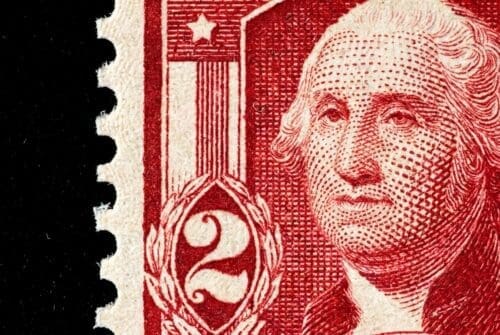
The album continues with the offset printed stamps, which have a sharper design with more contrast. The best of the group is Scott 528A, the Type 6 stamp, which is identified by the heavy line in the numeral 2. Type 6 is the most valuable type among the perforated offset stamps, with a catalog value of 115 dollars for a never hinged example.
Coil Waste Issues
The last group is the coil waste stamps, which were printed for coils and were then perforated on all sides and issued in sheets. The album has a Scott 538A in an imperforate pair with a small tear, and a Scott 545, which is coil waste in perf 11.
That is the whole album. I am breaking it into individual lots for my Facebook group, so join if you have not already. Thanks for following along, and as always, best of luck and happy collecting!







Ask A Question Or Leave A Comment