





In this post I react to a popular YouTube video from Couch Collectibles titled “10 Super Rare Stamps Worth Money”. Stamp collecting depends on detail and on philatelic knowledge, and that is where the video runs into trouble.
The video has more than 349,000 views and is the top result on YouTube for a search on the most expensive stamps. The channel is known for its coin collecting videos, and I think its move into philately leaves a lot to be desired.
Misidentifications and Lack of Expertise
Mistaking Historical Figures
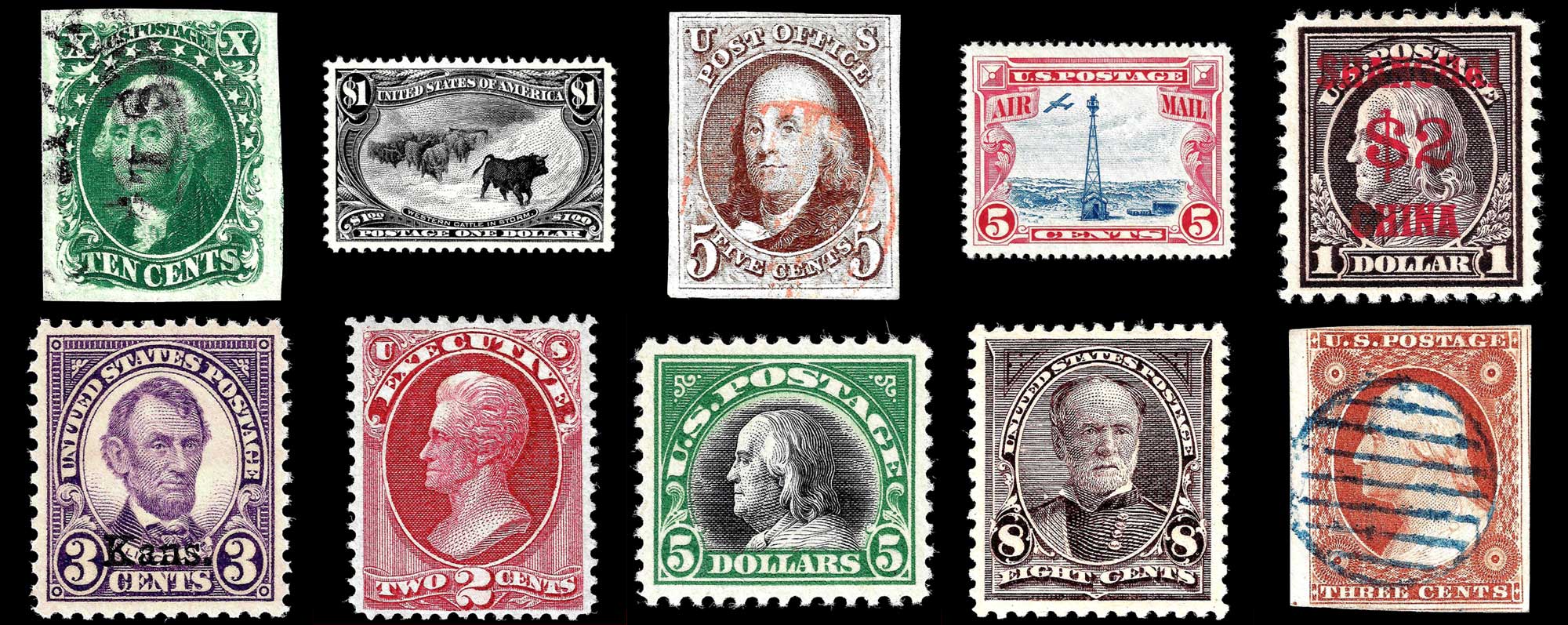
This video starts off with a stamp of Benjamin Franklin that the presenter identifies as Thomas Jefferson. Both of these men have also been depicted on US coins, so this error negatively affects the credibility of the video within its first minute.
Confusion About Terminology
This video also contains some basic philatelic errors. For example, the presenter describes a cancel on a used stamp as ‘some kind of ink that’s been pressed on it’. This would give a viewer the wrong impression of what is in a collection.
Overemphasis on Rare Stamps
Misleading Representations of Value
Many of the stamps in the video are rare and valuable, among them Scott 534B, the offset Type VII stamp of 1920 with the portrait of George Washington, and Scott 613, the Harding rotary press stamp. The video leaves out the details that separate the rare varieties from the common stamps of the same design. Two examples follow.
Scott 534B is separated from the common stamp by details of the design that the video does not show. Scott 613 is separated from the common Scott 610 by the dimensions of the design, which are measured in millimeters. Without those details a viewer may believe that any stamp of the same general description is worth thousands of dollars.

No Mention of Authentication
Forgeries and reprints are everywhere in philately. A high value stamp needs an expert certificate, and the video never says so. Here are two examples.
Hawaii Scott 1 is cataloged at 250,000 dollars in used condition, and the video does not mention that reprints and fakes are far more common than the genuine stamp. The RG103 silver tax stamp is cataloged at 40,000 dollars and needs a certificate of authenticity.
The Problem with Viral Misinformation
Overgeneralization of Collectibles
The video stresses the value of the rare stamps and does not mention that the great majority of the stamps with similar designs are common and nearly worthless. Without that distinction the video gives false hope to casual collectors.
Promotional Nature of the Content
The video also spends a good deal of time on promotion, with repeated requests to join membership programs and to follow social media channels, and the promotion takes time away from the information.
Algorithmic Failures
This video is the top result for “most expensive stamps” which is a good indicator of how search results are determined. I would like to see well researched videos outrank videos that contain errors.
Key Examples from the Video
The Ben Franklin Reissue of 1875
The video says that this 1 cent stamp sold for 28,000 dollars. The video does not say that the stamp is a reissue on hard white wove paper that was issued without gum, that the current catalog value is 14,000 dollars and that the stamp has to be authenticated.
The Harding Rotary Press Stamp (Scott 613)
The video says that this stamp sold for more than 103,000 dollars. The video does not say that the rotary press printing makes the design slightly larger than the design of the common Scott 610, or that authentication and centering change the value dramatically.
RG103 Silver Tax Stamp (1942)
The video says that the stamp sold for more than 46,000 dollars. The video does not explain that the 1942 issue has to be separated from the similar designs of 1941 and 1944, or how the series is identified and authenticated.
Couch Collectibles does good work on coins. This video on rare stamps is not at that level, and I would not hand it to stamp collectors as a guide. Check more than one source before you value a stamp, and get a certificate on anything that matters.
I point these things out so collectors can find better philatelic information. As always, happy collecting!





Ask A Question Or Leave A Comment