






People ask me all the time what a full-time stamp dealer keeps for himself. The honest answer is that I still have a collection, but I treat it as an investment portfolio and not as a hobby album.
In this post I go through how collecting differs from investing, what I look for in a stamp before I put money into it, and seven stamps from my own portfolio with their grades and values.
From Collector to Dealer
Most stamp dealers begin as collectors, and over the years many of the dealers move from collecting for enjoyment to buying and selling for profit. For a dealer the stamps are a business and the stamps have to be sold to keep the business running, which is why the stamps that a dealer keeps tend to be chosen for what the stamps will bring later and not for what the stamps mean to the dealer.
Understanding the Difference Between Collecting and Investing
A collector buys from personal interest. The collector may follow one country, one theme or one period of history, and the reward for the collector is the hunt for the missing stamp, the completed set and the stamp that carries a family or historical connection. An investor in stamps buys from market trends, past price records and the balance of supply and demand, and the attachment of the investor to any one stamp comes second to the return that the stamp is expected to make.
What Makes a Stamp a Good Investment?
Condition is the first test of an investment stamp. Perfect centering and the absence of damage raise the price of even common stamps, and a stamp that normally sells for 1 dollar has brought as much as 900 dollars in the grade of 100J, the grade for a stamp with jumbo margins and perfect centering. Only two examples of that stamp are known in the grade of 100J.
Printing quality explains why centering carries that much weight. Stamp printing before the 1940s was less exact than printing after the 1940s, so a well centered stamp from the earlier period is hard to find and is priced for it. Damage counts in the same way, and an undamaged example of a rare stamp can sell for twice the price of a damaged example.
Rarity and scarcity are two separate measures. A rare stamp exists in very small numbers, while a scarce stamp may exist in larger numbers and still be hard to find on the market. A good investment stamp is normally rare or scarce and is also in top condition.

Market Forces: Supply, Demand, and Popularity
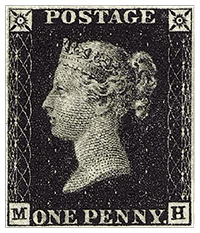
A popular stamp in excellent condition is the stamp most likely to hold its price and to rise in price. Scott 1 is rare and is wanted by a large number of collectors, and a damaged copy of Scott 1 may sell for under 200 dollars while a well centered copy without damage can bring 500 dollars or more. Popularity matters because a rare stamp that appeals to many collectors is easy to sell, and a rare stamp that appeals to a small group of collectors can be slow to sell at any price.
Certification and Grading
A certificate and a numeric grade give the investor an independent record of the condition and centering of a stamp, and the record lowers the risk of a surprise when the stamp is bought or sold. The values that I use for graded stamps come from the website of Professional Stamp Experts, which is known as PSE.
The PSE value for a graded stamp is called the SMQ value, from the Stamp Market Quarterly. Most auction houses charge a commission of about 20 percent, so I estimate the real return on a graded stamp at about 80 percent of the SMQ value. A stamp with an SMQ value of 100 dollars returns about 80 dollars to the seller after the fees.
My Personal Investment Rules
I follow three rules. The first rule is that I do not invest in a stamp with any damage. The second rule covers the rare stamps of the 19th century, where I put sound condition ahead of centering and accept a stamp that is slightly off center. The third rule covers the stamps printed after 1900, which have to be both sound and well centered, because printing standards improved after 1900 and high quality examples are easier to find.
Highlights from My Investment Portfolio
Scott #131 is the reissue of the 30 cent stamp from the 1869 Pictorial series. The example in the portfolio is unused without gum and is graded 85, which is very fine to extremely fine, with an SMQ value of 1,500 dollars. The stamp was first graded 80 and was raised to 85 after the grade was reconsidered. The stamp is sound, well centered and from a popular set.
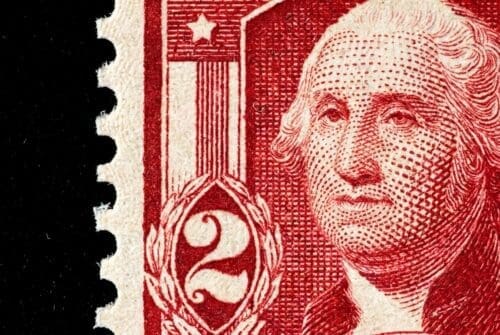
Scott #220c is the small Bank Note stamp of 1890 with the cap on both of the numeral twos. The example is mint with original gum and is sound, and the catalog value is 650 dollars. A used example of the same variety is worth only 30 dollars, which shows how much condition and variety add to a price.
Scott #245 is the 5 dollar Columbian of 1893, the high value of a famous set of United States commemorative stamps. The example is mint and lightly hinged, is graded 90 and is valued at 4,500 dollars.
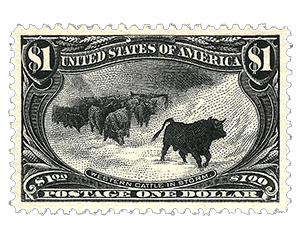
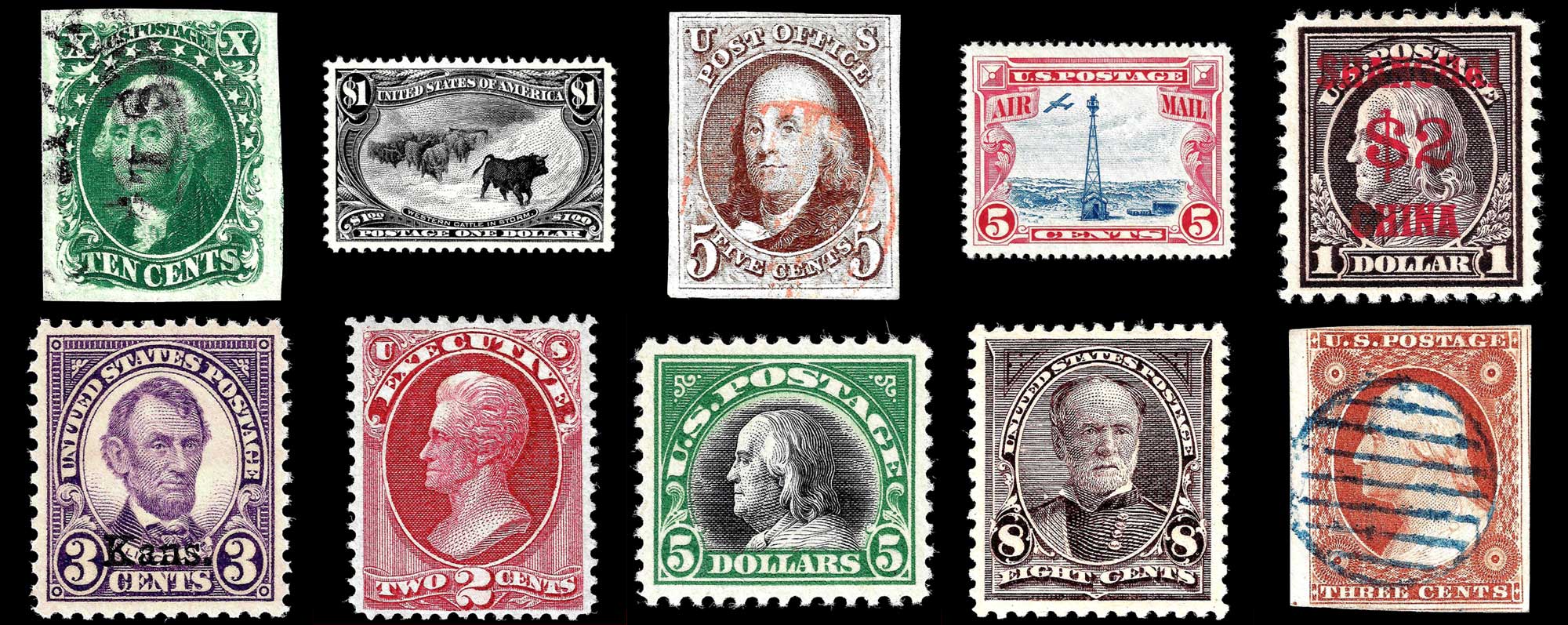
Scott #292 is the Cattle in the Storm stamp from the Trans-Mississippi issue, which is regarded as one of the most beautiful stamps produced by the United States Post Office. The example is mint and lightly hinged, is graded 90 and is valued at 1,800 dollars.
Scott #294 is represented by the inverted ship error, a famous error that remains in demand with collectors and with investors. The example is sound with centering that is almost very fine, and the value is 12,500 dollars.
Scott #583 is a common stamp with a catalog value of only 6 dollars. The example in the portfolio is graded 100 and is the only example known in that grade, and the value is 1,250 dollars.
Scott #619 is graded 100J and is valued at 625 dollars. The stamp was found in the album of a casual collector, and the perfect centering is the whole reason for the value.
You can be a collector and an investor at the same time. Investing makes more sense for me because I have to sell stamps to keep the doors open. If the return matters more to you than the attachment, investing is probably your path too.
If this helped, I have more on identifying rare stamps, collecting tips and philatelic history on the site. Until next time, best of luck and happy collecting!






Ask A Question Or Leave A Comment