








Wartime markings are the layer of history stamped over a stamp’s original life. They tell you where a letter was routed, who opened it, whether it belonged to a soldier, a prisoner, or a civilian caught between lines. A single censor handstamp can move a cover from “nice” to genuinely rare in one stroke.
### Why Markings Matter
Markings are not decoration. They are evidence of systems: military postal networks, censorship offices, occupation administrations. A handstamp can show a commander’s office, a field post unit, or a blockade route that a letter took. When you study them, you learn networks and bureaucracies, not just ink and paper.
#### Postal Regulations And The Marking Types
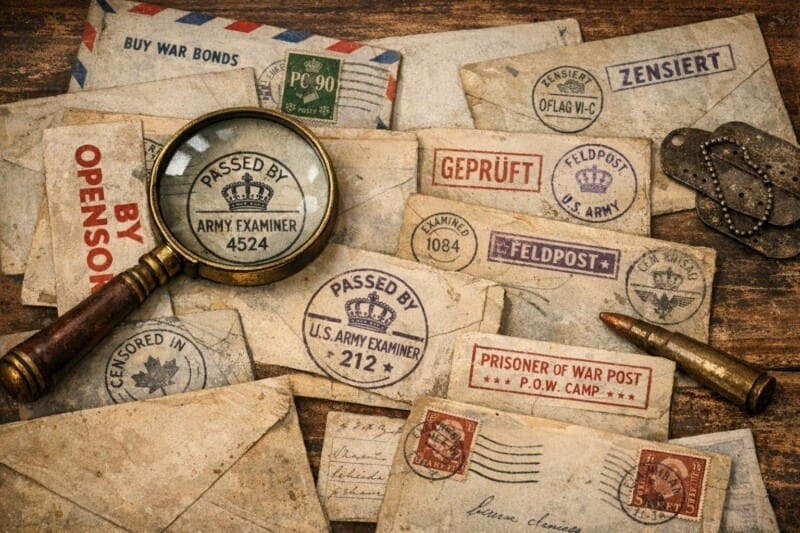
Different regulations produced different marks. Common families are:
– Censorship cachets and tape.
– Field post or military post cancellations.
– Occupation overprints and provisional surcharges.
– Prisoner Of War (POW) and internee marks.
– Siege, balloon and emergency posts.
Each family has its own set of telltale signs: censor numbers, triangular or circular shapes, bilingual text, or redirection handstamps. Pay attention to placement; a censor mark across the flap is more convincing than one applied neatly in the margin.
## Field Examples From Major Conflicts
Concrete cases teach faster than theory. These examples are ones you’ll see on dealer lists and in auctions.
### Siege And Early War Postal Stories
The Siege Of Paris (1870) produced Ballon Monté covers flown out of the city in balloons. Those covers usually carry a straight-line Ballon Monté mark and sometimes a manuscript routing note. They’re small in number and easy to spot.
#### The US Civil War
Confederate period covers often show paid and due markings, depot handstamps, and blockade-related annotations. Provisional stamps and manuscript town names signal a disrupted postal system. Those markings are frequently on folded letters rather than adhesive-stamp covers.
### World War I
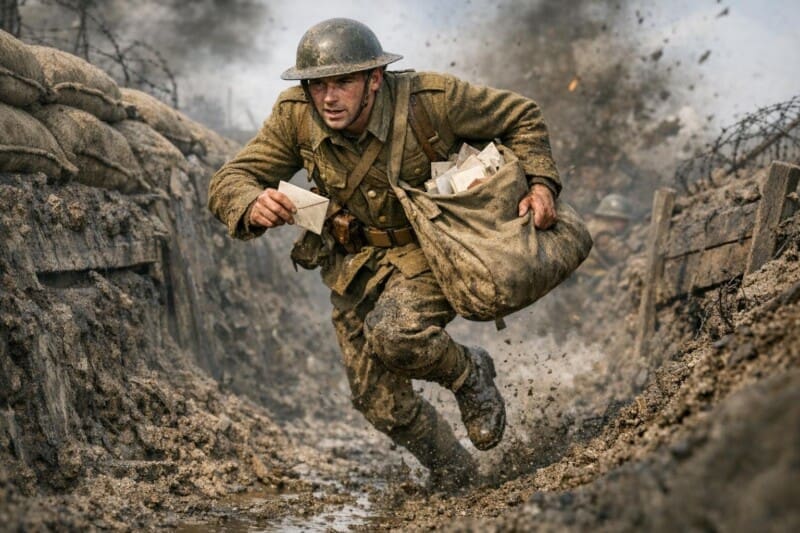
Trench post and base censoring left neat caches across the Western Front mails. British mail commonly shows “Opened By Censor” tape or triangular censor cachets with identifying numbers. German Feldpost cancellations—often a simple “FELDPOST” with a date—point to unit movement. Letters with both censor marks and unit cancels are the ones to watch.
### World War II
This war produced the richest variety. Expect:
– British and American censor tapes with examiner numbers.
– German Feldpostnummer cancels tied to specific units.
– Occupation overprints across Europe, from the Channel Islands to Krakow.
– POW and internee cards with Red Cross transit marks.
Small oddities can be valuable. A misrouted letter that picked up multiple censor strikes or an evacuation cover that crossed through neutral country can become a textbook piece.
#### Pacific And Asian Theatres
Japanese occupation policies led to widespread overprints on local issues—often crude and hurried. Postal markings from remote island garrisons have odd purple or red handstamps and are frequently forged, so authentication matters.
## How To Authenticate And Conserve Wartime Postal Markings
You can tell a lot from the ink and the impression, but you also need paperwork and a cautious eye.
### Forensic Clues
Check the ink: wartime inks were often iron-gall or oil-based; they age differently than modern pigmented inks. Look at impression depth. Genuine wartime rubber handstamps were struck with varying force; perfect, machine-like consistency is suspicious. Check for routing consistency: does the censor number match known lists for that period? Provenance is invaluable. A cover with a well-documented chain of ownership starts with more credibility than one from an anonymous lot.
#### Ink, Hand Impression, And Paper
Examine paper fiber, watermarks, and postal inks under magnification. A genuine flap tape will often show wear and tear consistent with opening. If a censor tape is glued on top of a cancel that should be beneath it, the sequence could be wrong. For feldpost and unit cancels, cross-check dates with unit movements from military records.
### Storage And Handling Tips
Keep items flat and dry. Use acid-free sleeves and albums. Avoid pressure that smudges impressions. Don’t remove tapes or seals in haste; they are often part of the story. Many colletors learn the hard way about damp basements and invasive adhesives.
## Marketplace And Rarity Drivers
What makes a wartime-marked cover scarce? A few factors drive value. First, scarcity of use: a field post cancellation used for a month is rarer than one used for years. Second, unusual routing or censorship—letters that passed through neutral ports or through multiple censorship offices—score higher. Third, association to events or people: a letter tied to a known battle, a famed POW camp, or a political arrest will attract specialists.
Provenance, condition, and documentation amplify these effects. A reasonably common censor mark can jump in value if accompanied by a dated letter that corroborates the story. Auction descriptions that include scans of both sides of the cover, plus a transcription when possible, make it easier to assess authenticity and worth.




Ask A Question Or Leave A Comment