








Start by deciding why you want a collection. That sounds basic, but it changes everything. Do you collect for history, design, investment, or the simple pleasure of flipping through colorful paper? Narrowing that motive will keep your choices practical and stop the collection from becoming a random pile.
## Stamp Collecting: Getting Started
Most beginners try to collect everything and get overwhelmed. Pick a manageable entry point: a country, an era, a theme like birds or space exploration, or even a single designer. Each of those paths teaches different skills. Country collections teach geography and postal history. Thematic collections push you to research and hunt for specific images. The key is to pick something that keeps you curious.
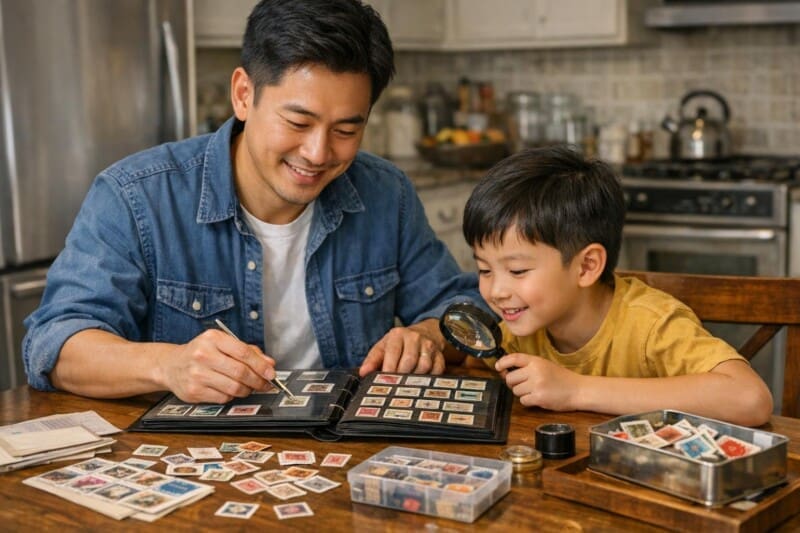
Start modestly. Buy a small starter album, a few stock pages, and a basic magnifier. You don’t need the nicest binder on day one. What you do need is a system you can sustain. If you flip through a bag of stamps every weekend, that beats owning a pristine but untouched hoard.
### Define Your Scope
Decide what “complete” means for you. For instance, is a first-day cover necessary, or will a mint stamp do? Do you collect just standard issues or also commemoratives and airmail? Setting boundaries prevents scope creep and helps you budget.
### Set A First-year Budget
Stamp collecting isn’t inherently expensive, but it’s easy to tinker away cash on single items that don’t move your collection forward. Allocate money for tools, some purchases from dealers, and a bit for attending a local show. That small plan will keep impulse buys in check.
## Choosing Your Focus
Collections that last are built around a focus that fits daily life. If you travel, country-centric collections can be practical; if you like art, look for stamps by notable designers. Themes work well if you enjoy research-based hunting. Combine approaches if you must, but try to weight one element as your primary thread.
### Country Collections Versus Thematic Collections
Country collections are straightforward: gather issues from a single postal authority. It’s tangible and tends to follow a clear catalog structure. Thematic collections, say stamps featuring trains, require searching across many countries and eras. Theming teaches connecting threads, but it requires patience and a bigger network.
#### How To Scout A Focus
Look at what already exists online and in catalogs. Browse auction listings and dealer stock to see how abundant certain stamps are. Visit a club or two and ask collectors what they love. You’ll find patterns: birds, kings and queens, and Olympic themes are everywhere; obscure local fauna or short-lived colonial issues are rarer.
## Tools And Supplies You Actually Need
You will find a range of gear that looks essential until you try to use it. Keep it simple at first and upgrade as you learn what matters to your workflow.
### Essentials
– A basic stockbook or starter album.
– Stamp tongs (don’t use your fingers).
– A magnifier with at least 10x.
– Glassine envelopes or small clear mounts for handling loose stamps.
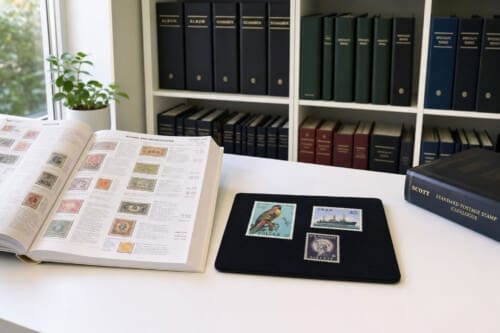
– A price catalog or access to an online catalog (digital is fine).
Buy the stamp tongs first. They’re cheap and they protect stamps; that small investment prevents mistakes. Use simple mounts rather than hinging if you can afford them, since the mounts protect the gum on mint stamps and make rearranging painless.
#### What To Avoid Buying Right Away
Top-of-the-line binders, thousands of dollars in rare stamps, and complicated mounts tailored to obscure sizes. Those purchases can wait until you understand your collection’s needs.
## How To Acquire Stamps Without Getting Ripped Off
There are three primary ways to obtain stamps: dealers, auctions, and swaps. Each has pros and cons.
### Buying From Dealers
Local dealers let you inspect items and ask questions. That’s invaluable when you’re learning to spot forgeries or condition problems. Expect to pay a premium for that convenience. Build a relationship with one or two dealers. If they know your focus, they’ll call when something appropriate arrives.
### Auctions And Online Marketplaces
Online auctions expand your reach, but they require more homework. Read descriptions and study photos closely. Calculate buyer’s premiums, shipping, and the likelihood of returns. Don’t bid emotionally on a single lot; set a firm maximum and walk away if the price climbs.
### Exchanges And Mail Sales
Swap groups and mail sales are surprisingly friendly to beginners. You trade duplicates and sometimes get better-value pieces. They also teach you to describe condition accurately and to manage small shipments.
#### Spotting Bad Lots
Avoid any seller who won’t provide decent photos or who refuses returns on misdescribed items. If a deal looks too good to be true, it usually is. Forgeries exist; learn the common types for your area of focus.
## Organizing And Cataloging
A messy collection loses value quickly. Organization doesn’t have to be formal, but you should create a repeatable system for where stamps live, how they’re described, and how you record purchases.
### A Simple Cataloging Process
Start a spreadsheet or notebook. Record country, year, catalog number, condition (mint, used, hinged), provenance if known, and purchase price. Add a column for notes like “repaired corner” or “variant watermark.” Even basic records make it easier to track duplicates and measure progress.
### Physical Organization
Use stockbooks for loose stamps you’re still sorting and albums for the pieces you want displayed. Keep circulation stamps separate from high-value items. Store heavy volumes upright to prevent warping.
#### Labeling Your Pages
Label pages with a short handle like “GB 1960s Commemoratives” or “Birds Theme.” That reduces hunting time later. It also helps when you lend items to a club or enter a local exhibition.
## Preservation And Care
Stamps are paper and fragile. Humidity, sunlight, and improper handling do real damage.
### Storage Basics
Store stamps in a dry, dark place. Avoid attics and basements. A closet inside the living space is usually ideal. Use acid-free pages and avoid PVC mounts; they can leach chemicals over time. If you live somewhere humid, a small silica packet in a sealed box helps.
### Handling Tips
Always use tongs. Don’t press stamps against glass; that can flatten and damage adhesives. If a stamp is dirty, consult a guide before trying to clean it; improper washing will ruin the gum or color.
#### Dealing With Repairs And Restoration
Repairs are common in older collections. If value is important to you, learn to spot regumming, trimmed perforations, and color retouching. When in doubt, ask a reputable expert before buying or selling an item that looks altered.
## Learning To Value Your Collection
Value is personal and market-driven. A stamp with sentimental value to you might be nearly worthless on the open market, and vice versa.
### Using Catalogs And Marketplaces
Catalogs give a baseline, but real value is what people are willing to pay. Check recent auction results and dealer prices for similar condition stamps. Condition heavily influences price; a small tear or thin spot can reduce value dramatically.
### When To Get Professional Appraisal
If you suspect items are rare or worth significant money, get a professional appraisal before selling. Appraisers look for authenticity, condition, and marketability. They also see things you might miss.
## Selling And Trading
Selling is an art. Packers who do a lot of small transactions value clear photos and honest descriptions. Big lots might be better handled by an auction house or a dealer who specializes in estates.
### Preparing Lots For Sale
Organize them logically, by country, era, or theme. Present accurate counts, and disclose any faults. Buyers forgive some wear if you’re transparent.
### Trading Within The Community
Trading is often the fastest way to refine a collection. Clubs and online forums facilitate swaps that help both sides. Check reputations and ask for references when trading high-value items.
## Joining The Community
Stamps are social. Clubs, online forums, local shows, and specialist societies provide knowledge, access to obscure items, and critique that improves your skills.
### What To Expect At A Club Meeting
Bring a couple of pages and be ready to ask specific questions. Most collectors are generous with advice, and you’ll learn far more from looking at others’ material than from reading alone.
#### Finding Reliable Online Resources
Seek sites and forums with active moderators and a track record. Auction archives, scanned catalogues, and specialist society publications are better than random chat threads.
A small, well-curated collection is more satisfying than a chaotic empire of random stamps. Focus, good habits, and a willingness to learn will get you from your first envelope of fleas to a collection you can be proud of, whether you display it on a shelf or keep it tucked away as a personal archive. Somewhere along the way you’ll find a rhythm: a weekly hour at the table, a dealer to trust, and a list of stubborn holes to chase. That’s when the hobby stops being a hobby and becomes your collection.




Ask A Question Or Leave A Comment