










You can make money and build a great collection without getting burned, but only if you stop treating stamps like postcards and start treating them like inventory. That change in mindset separates hobbyists who lose money from collectors and dealers who thrive. Think in terms of market signals, provenance, and logistics, not just pretty designs.
## Understanding The Stamp Market Dynamics
Collectors in Tokyo won’t value the same issues as dealers in London. Demand is regional, and prices follow where collectors concentrate. Classic line-engraved British stamps still fetch big prices in the UK and Commonwealth countries, while postal history from Latin America often finds its strongest bids in Europe and the Americas. Learn where your stamps have real buyers.
### Supply Chains And Rarity
Rarity isn’t a single number. It’s a function of survivor count, condition distribution, and market awareness. Some stamps are theoretically scarce but surface frequently because they were saved in archives. Others are common in poor condition and vanishing in good grade. Keep track of lot results and private sales as well as catalog listings; actual sale prices tell you more than any price guide.
#### Errors, Varieties, And Provenance
A small tear or a trimmed margin can cut value drastically. But genuine color errors, plate varieties, and documented provenance can multiply interest. Provenance is especially powerful for high-end items. A large private collection sold piecemeal will command more attention if a handful of lots link to a respected earlier owner or to a museum sale.
## Where To Source Stamps Globally
You’re not limited to your local dealers. The market is global and fragmented. Each source has different price structures, buyer bases, and risk profiles.
### Online Marketplaces Versus Auction Houses
eBay, Delcampe, and HipStamp are great for volume and scouting bargains. You can find overlooked lots, regional issues, and single items you couldn’t otherwise access. Auctions, such as Spink, David Feldman, or regional philatelic houses, are better for high-value or unique items because they bring concentrated buyer interest and transparent sale records. Use both: eBay for depth, auctions for headline pieces.
### Local Dealers, Fairs, And Exchanges
Small dealers still matter. They often have unsorted accumulations and can be trusted partners for grading and buying in bulk. Stamp fairs let you compare prices quickly and form relationships. Don’t skip them because they feel old-fashioned; many dealers at fairs have decades of experience and are good at spotting items that slip past online filters.
## Pricing And Valuation Tips
Catalog values are starting points. They reflect a reference price under standard conditions, not a guaranteed sale amount. Treat them as a floor for negotiations, not a ceiling.
### Grading And Condition
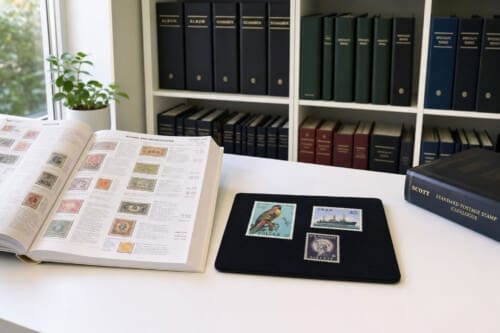
Condition drives most price differences. Centring, gum condition, perforations, thins, and repairs: each factor is quantifiable and often decisive. Invest in a good loop or magnifier and learn to detect common repairs. For high-value stamps, get an expert certificate before listing. Buyers will pay for documented quality.
#### Market Signals Versus Catalog Values
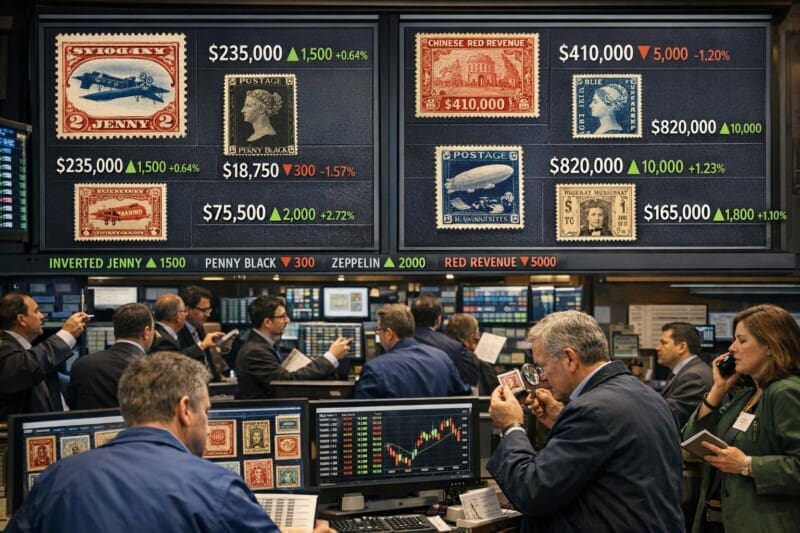
Watch realized prices. If a specific issue trades at 40-60% of catalog over several sales, that’s the market, not the catalog. Conversely, a spike in realized prices indicates a niche hype or a fresh discovery. Track the last 12–24 months of sales, not just one auction.
## Authentication And Documentation
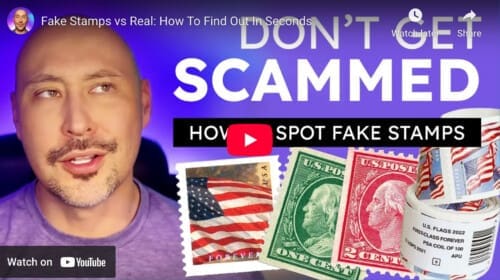
Forgery is not rare. For large purchases, documentation matters as much as the item.
### Certificates And Expertizing Bodies
Use respected expertizers: the Royal Philatelic Society London, the Philatelic Foundation, and national bodies like the American Philatelic Society. A certificate from a recognized body reduces friction and increases sale price. Be wary of private certificates with no institutional backing; they help, but they don’t replace an established expert opinion.
#### Handling Fakes And Repairs
If you suspect a forgery or repair, stop and get a second opinion. High-resolution scans and UV light can reveal repairs, erased cancels, and color alterations. Document everything: photos before any cleaning, provenance data, and any correspondence. For sellers, full disclosure is essential. A misrepresented repair can ruin your reputation.
## Shipping, Insurance, And Customs For International Trades
Shipping is where small mistakes become expensive. Treat packaging and paperwork as part of your product’s value.
### Packaging And Tracking
Always use glassine envelopes or archival mounts, then place items in stiff card-backed envelopes or small rigid mailers. Wrap in a bubble mailer and use registered or tracked shipping for anything of value. Insure items for their declared market value, not catalog or optimistic estimates. For very rare items use courier services with signed-for delivery and specialized handling.
#### Tariffs, Import Rules, And Declared Value
Customs rules differ. Some countries exempt stamps under a threshold, others tax them as collectibles. Know whether the destination country requires a separate invoice or specific HS tariff code. Misdeclaring value to avoid duties is illegal and risks seizure. For sellers, state the true value and choose the appropriate commodity code. The buyer may be responsible for duties, but lack of transparency kills sales.
## Payments, Escrow, And Fraud Prevention
Money is where disputes happen. Choose payment methods that balance convenience and protection.
### Secure Payment Methods
Bank transfers and PayPal (where allowed) are common. For high-value transactions use escrow services or vetted auction platforms that hold funds until both parties confirm receipt. Avoid unusual payment requests like gift cards or crypto transfers for first-time buyers and sellers.
### Documenting The Transaction
Keep a clear invoice that lists items, condition, and sale terms. Add shipment tracking and require a signature on delivery for high-value items. If a buyer claims non-receipt, a signed delivery confirmation is often decisive. Maintain good records, since they protect both parties.
## Negotiation Tactics For Buyers And Sellers
Negotiation is psychological as much as numerical. Presentations and timing matter.
### Setting Reserves And Opening Bids
If you’re selling at auction, set a realistic reserve. Too high and your lot sits unsold; too low and you leave money on the table. For private sales, start with a firm ask price that allows room for negotiation. Buyers should prepare walk-away prices. Don’t get sentimental; know your bottom line.
### Building Trust And Repeat Business
Repeat buyers pay premiums. Build a simple system for communication: quick photos on request, honest condition notes, and reasonable shipping times. If you’re a seller, packaging that arrives in perfect condition is a form of marketing. Buyers remember reliability.
## Building A Global Network
The most successful participants treat the stamp market like any cross-border trade: they build relationships, not just transactions.
### Cultivating Contacts
Keep a short list of reliable contacts in different regions: a dealer in Cairo, a collector in Buenos Aires, an auction house rep in Zurich. Those contacts can tip you about material before it hits public platforms and sometimes help with authentication and logistics. Trade small favors; it pays over time.
#### Sharing Knowledge And Staying Informed
Subscribe to specialized auction catalogs and price lists. Join a couple of focused philatelic forums or country-specific study groups. A single smart observation, such as a new watermark source, a discovered plate variety, or a change in postal regulations, can change the value of a whole series overnight.
One final practical note: slow down on impulse buys. A tempting lot can cost more when you factor in authentication, restoration, shipping, and re-sale friction. Buy with a plan. If you want to flip a block of early issues, check buyer demand first, and if you’re building a long-term collection, focus on condition and provenance. Either way, be willing to walk away when the math doesn’t add up. You’ll learn faster that way and keep your cash for the right oppurtunity.




Ask A Question Or Leave A Comment