





A certificate is the difference between a stamp you believe is valuable and a stamp a buyer will pay for. In the video above I walk through how stamp certification works, when it is worth the money and how I ship stamps to the experts. This page covers the same ground in writing.
Understanding Stamp Certification
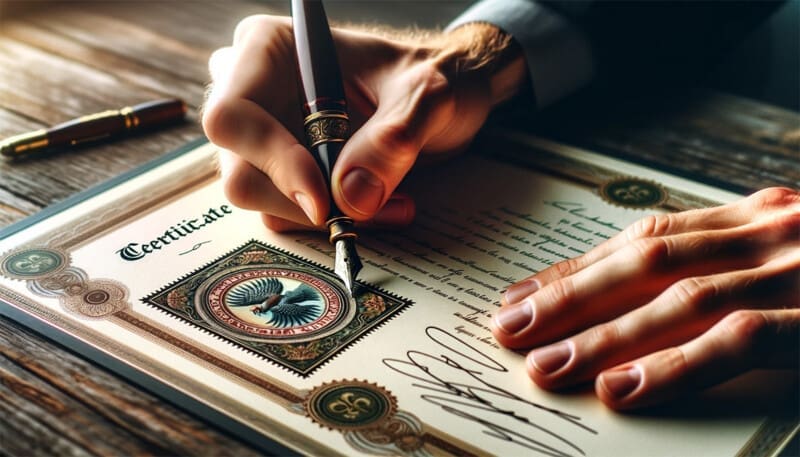
Stamp certification is a specialized examination of a stamp to determine its authenticity and condition. The expertizing service issues a physical certificate of the stamp, which is accompanied by a photograph of the stamp, detailing the stamp’s description and condition. Certificates are used in stamp collecting in much the same way as grading and authentication are used for sports cards, comic books, coins, and autographs.
Reasons for Stamp Certification
Certification settles identity. Many stamp designs exist in varieties that are easily mistaken for each other, and the varieties of a single design can range in market value from a few dollars to several thousand dollars, so a certificate naming the exact variety removes the largest source of argument between a buyer and a seller.
Certification also records condition. The examination covers damage such as tears, creases and thins in the paper, and the examination covers alterations such as reperforating and trimming that are done to improve the appearance of a stamp. Because counterfeits and altered stamps are a known problem in the market, collectors and auction houses pay more readily for a certified stamp, and a certified stamp holds its value better at resale.

Criteria for Certifying Stamps
A stamp is worth certifying if (1) the certificate makes the stamp significantly easier to sell, and (2) the cost of the certificate can be recovered in the final selling price of the stamp. Experienced collectors measure a stamp accurately and check for any alterations before submitting a stamp for certification, as the fee for certification is best spent on stamps that will return with good results.
Cost Considerations for Certification
Certification fees vary with the service and with the catalog value of the stamp. At the time the video was made, a typical fee ran between 25 and 35 dollars, with a percentage of 1 to 5 percent charged on stamps above a certain value and a maximum fee of 300 to 400 dollars. Each service publishes a current fee schedule, and the current schedule is the figure to rely on. Certifying a stamp that sells for 20 dollars makes no sense at those fees, whereas a sought-after stamp such as a Scott #1 easily justifies the expense.
Assessing the Market Potential
In order to judge the value that a certificate adds to the sale price of a stamp, one must have some experience with this. By watching auctions and following the prices of sold items on eBay and at the major auction houses, one can develop the experience needed to determine whether or not a certificate is a sound investment for any particular stamp.
Recognized Expertizing Services in the United States
For United States stamps only a small group of expertizing services is widely accepted by collectors and auction houses:
- Professional Stamp Experts (PSE)
- The Philatelic Foundation (PF)
- The American Philatelic Society (APS)
- Philatelic Stamp Authentication & Grading (PSAG)
The video also lists William Crowe, who passed away June 22, 2025. Certificates issued by William Crowe are still being circulated. Certificates issued from a service outside of the recognized group of certificate issuers carry a real risk of being ignored by potential buyers.
Shipping and Packaging Guidelines
Each stamp is placed into its own protective dealer card. These cards are then placed into thick plastic sleeves, the same as those used for covers, to add stiffness. The sleeves are then placed into a zip lock bag to prevent any moisture from getting to the stamps. Several stamps can be placed into the same zip lock bag.
The bag goes into a rigid cardboard mailer, commonly 9 by 7 inches, so that nothing can shift, bend or fold in transit. The package is sent by a service with signature tracking, with insurance added where the value calls for insurance.
Turnaround Times and Handling Risks
Certification typically takes 30 to 60 days. This is an issue when you have just purchased a stamp and the seller gives you a very short amount of time to return it because the certificate will not be received in time.
A certificate is an expert opinion and not a guarantee. Expertizing services have made errors in the past, including failing to recognize a reperforation as well as misidentifying a stamp with a reperforation. A collector may disagree with a certificate of expert opinion and have the stamp sent to another recognized service for a second opinion, again for a fee.
Making the Decision to Certify
Before you send anything in, ask three questions. Will the certificate make this stamp easier to sell? Will the sale price cover the fee? Have you done enough research to be confident about what the stamp is? If the answers are yes, send it. Every submission teaches you something about the market, and the more of them you do, the better your judgment gets about the next one.





Ask A Question Or Leave A Comment