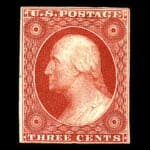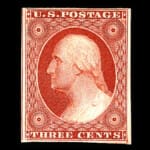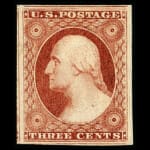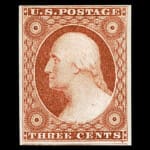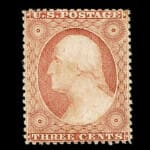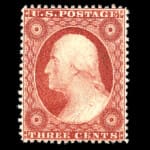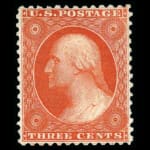









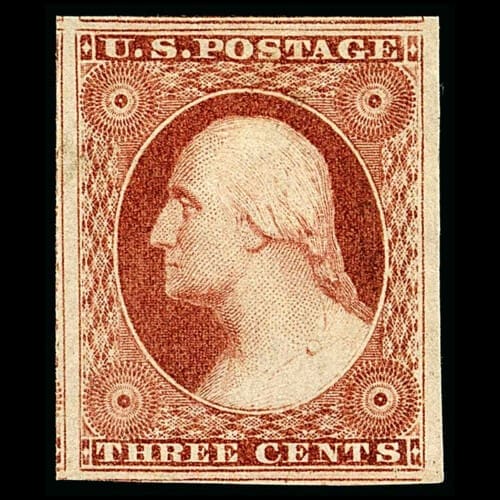









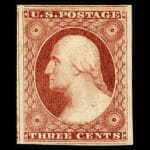
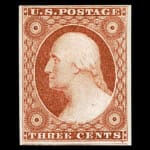





The United States stamp Scott #11, a variant in the 3-cent George Washington series, is an important element in American philately. This analysis focuses on its design, postal usage, and identification, distinguishing it from similar issues like Scott #10 and Scott #10A.
Design & Print
Scott #11, characterized as a Type I design, exhibits specific design features that are crucial for its identification. The Type I design includes an outer frame line on all four sides, with no inner frame lines, a feature it shares with Scott #10. However, Scott #11 is notably different in its coloration – it is predominantly printed in a dull red shade, contrasting with the orange-brown hue of Scott #10. This color distinction is significant, as the dull red tone of Scott #11 ranges in shades from pinkish to claret, with brownish carmine being commonly observed. The ink used for Scott #11 was different from the high-quality Venetian red and vermilion mixture used for Scott #10A, resulting in a less vibrant and more diluted appearance.
Postal Usage
In the postal system of its era, Scott #11 served a variety of functions. It was not only used for standard letter rates but also adapted for foreign mail, reflecting the evolving postal rates and regulations of the mid-19th century. While Scott #10A was predominantly used until the end of May 1852, Scott #11’s usage extended beyond this period, marking it as a more enduring stamp in postal history.
Identification
Identifying Scott #11 involves understanding its susceptibility to discoloration, a contrast to the more stable ink composition of Scott #10A. Scott #11 stamps are more prone to significant color changes when exposed to sulfides, often resulting in a darkened appearance. This characteristic is a key differentiator from Scott #10A, which exhibited greater resistance to such environmental effects. The cancellation marks and usage dates are also important for identification. Stamps used after May 1852, especially with cancellations indicating a later period, are likely to be Scott #11. The dull red color, in combination with the specific characteristics of the Type I design, aids in distinguishing Scott #11 from other variants in the series.
In summary, Scott #11 is a unique and significant stamp in the United States postal history, defined by its Type I design, distinctive dull red color, varied postal usage, and specific identification features. Understanding these aspects is essential for philatelists and historians to accurately place and appreciate Scott #11 within the broader narrative of American philately.
Have a copy of Scott #11?
Post a photo in the collectors community. Members will help you confirm the Scott number, judge the condition and give an honest value opinion. It is free.
Ask about U.S. stamp values or get help identifying a stamp