











Plenty of old stamps look valuable at first glance. Most are not. Some are. The hard part is knowing the difference before you start attaching numbers to them.
That is where people get tripped up. They want a simple chart, but stamp values rarely work that way. One copy might sell for a few dollars while another from the same issue brings far more because the centering is better, the gum is intact, the cancel is lighter, or the stamp is free of faults. A price list can help, but only if it is used the right way.
READ THIS BEFORE VIEWING THE OLD STAMPS PRICE LIST!
What People Usually Mean By Old Stamps Price List
Most searches for old stamps price list come from people trying to answer one immediate question: what are these stamps worth right now?
That sounds simple enough, but it usually involves a few separate steps. The stamp has to be identified correctly. Its condition has to be judged honestly. Then the listed value has to be compared to what similar examples actually sell for. Skip any of those steps and the number becomes shaky fast.
A lot of older collections include stamps that are genuinely old but still fairly common. Age by itself does not create value. A stamp from the 1800s can be inexpensive if millions were printed and large quantities survived. Another stamp from a later period may be worth more because it is scarcer, more difficult to find in sound condition, or more actively collected.
Why A Straight Price Chart Only Tells Part Of The Story
Collectors like lists because lists feel certain. Stamps are not always that cooperative.
A catalog may show one value for a used stamp and another for a mint example. That is helpful, but it still leaves out a lot. Is the used stamp lightly canceled or heavily struck? Is the mint copy hinged, never hinged, regummed, or disturbed? Is the centering average or unusually strong? Those details can move the real market price up or down in a hurry.
That is why an old stamps price list should be treated as a framework, not as a final answer.
The Biggest Factors That Change Stamp Value
Condition does most of the heavy lifting in stamp pricing. People new to the hobby often focus first on age or appearance. Experienced buyers usually start with condition.
Centering matters. Faults matter. Gum matters. So does eye appeal. A stamp with rich color, sharp perforations, and a clean overall look will draw more interest than a dull or damaged example, even when both are the same catalog number.
KEEP READING TO VIEW THE OLD STAMPS PRICE LIST!
Centering Can Change The Price Fast
On many older stamps, especially United States issues, centering is a big deal. A design that sits neatly in the middle with balanced margins usually brings stronger money than one pushed hard to one side.
This is one of the reasons newer collectors misread value so often. They find a catalog number, see a respectable figure, and assume their stamp matches it. The market may see it differently if the copy in hand is off center or cut close.
Faults Pull Values Down Quickly
Thin spots, tears, creases, stains, short perforations, pulled perfs, toning, and repairs all matter. Some damage is obvious. Some is easy to miss until the stamp is turned over or placed under stronger light.
A stamp can still be collectible with faults, but it should not be priced like a sound example. That sounds obvious, but plenty of inherited albums are valued too high because nobody checked the backs carefully.
Gum And Hinging Affect Mint Stamps
Mint stamps bring their own set of pricing issues. Original gum is important. Whether the stamp is hinged or never hinged also matters. A mint stamp with disturbed gum or a regummed back can create a major pricing mistake if it is treated like a fresh original example.
This is where experience helps. Many older stamps have been altered over the years to improve appearance, and those alterations do not always jump out right away.
How To Use An Old Stamps Price List In A Realistic Way
The best use of an old stamps price list is to narrow the field. It can help separate common material from stamps that deserve more attention. It can also help you avoid the habit of thinking every old stamp is rare.
Start with identification. That step matters more than most people think. Stamps that look nearly identical can belong to different printings, watermarks, or perforation types. One may be common. Another may be much better.
Then compare the condition to the level assumed by the price source. Do not grab the highest number on the page and stop there. Make sure the stamp actually deserves that comparison.
Retail Values Are Not Automatic Sale Prices
This is where expectations usually need adjusting.
Catalog values are useful reference numbers, but they are not guarantees. Many ordinary stamps sell below catalog. Strong premium examples may do better. The real market sits somewhere between printed guidance and actual buyer interest.
That is why completed sales are often more useful than active listings. Anyone can post a hopeful asking price. A finished sale shows what somebody was willing to pay.
Build In Value Ranges Instead Of One Exact Number
A practical approach is to think in bands. A damaged example may fall into one level. A sound average copy may fit another. A really attractive stamp may belong at the top of the range.
That is more honest than pretending every stamp has one precise value. Stamps do not behave like boxed retail items with fixed shelf tags. They move based on quality, demand, and confidence in the identification.

Common Value Levels Found In Older Collections
Most collections assembled by casual owners or inherited through family contain a large amount of lower-value material. That is normal. It does not mean the collection has no interest. It just means the better items need to be separated from the general run.
Many common definitives from the late 19th and early 20th centuries are worth modest amounts in average condition. Some sell for very little individually and do better in groups. Others may hold a few dollars of value each when sound and presentable.
Mid-Range Stamps Are Where Things Start Getting Interesting
Once you move beyond the most common material, you start seeing stamps that regularly sell in the ten to fifty dollar area, sometimes more. These are often stamps with better scarcity, stronger collector demand, or more consistent appeal in the market.
They are not always flashy. Some are simply harder to find in clean condition than people expect. Others are well-known issues that have a steady base of collectors looking for better copies.
The High End Usually Has A Clear Reason
When an older stamp carries a much stronger value, there is usually a reason behind it. It may be scarce. It may be a key issue. It may be a recognized variety. It may have an expert certificate, a premium grade, or outstanding eye appeal.
A real old stamps price list becomes useful here because it helps flag stamps that should not be tossed into a common pile or priced casually.
United States Stamps That Often Get Misidentified
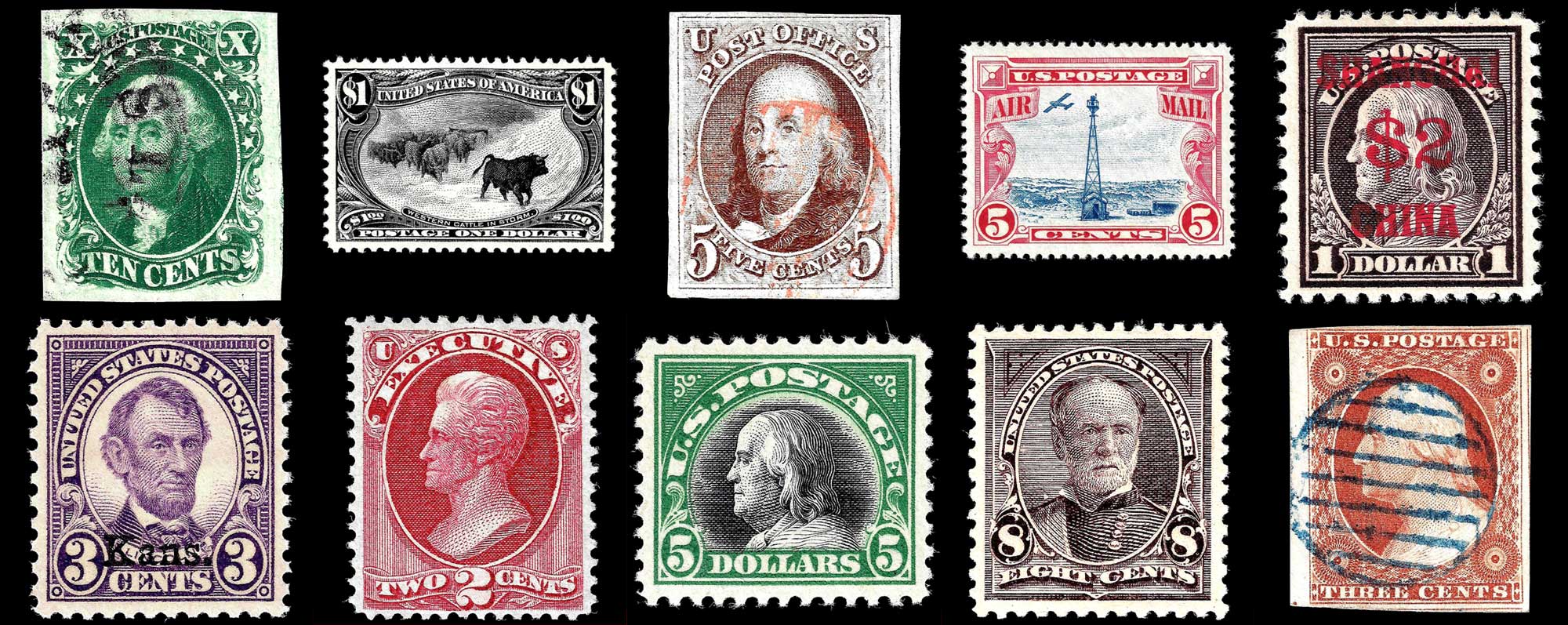
United States material causes a lot of confusion because many older issues look alike at a quick glance. Washington and Franklin stamps are a well-known example. Small details like watermark, perforation, or printing method can completely change the identification.
Bank Note issues can also confuse collectors who are working from appearance alone. Some back-of-the-book material does the same thing, including postage dues, officials, and revenues.
Similar Designs Do Not Mean Similar Prices
That is an easy trap. Two stamps can share the same portrait, color family, and denomination while belonging to different issues with different values. Without proper identification, a price list becomes less useful because the wrong number gets attached to the wrong stamp.
This is why patience matters. A rushed identification can do more damage than no identification at all.
Covers Need A Different Kind Of Valuation
A stamp on cover is not always priced the same way as the same stamp off cover. Postal history adds another layer. Routes, markings, rates, destinations, and unusual usages can make a cover worth far more than the loose stamp by itself.
Collectors who only use a basic stamp list sometimes miss that. Covers live in their own lane, and they often need a different buyer to bring the right price.
Catalog Value And Market Value Are Not The Same Thing
This point needs to be said plainly. Catalog value is a reference. Market value is what a buyer pays.
Those numbers may line up sometimes, but often they do not. Dealers need room to buy and resell. Auction houses reflect active bidding on specific examples. Private sellers may accept less for convenience. Buyers may pay more for eye appeal. The market is not perfectly neat.
Certification Can Change Buyer Confidence
A certified stamp usually carries more trust than an uncertified one, especially when the issue is often faked, repaired, or misidentified. That added trust can lift the selling price because buyers feel less exposed.
Without certification, a buyer has to make assumptions. Assumptions tend to lower offers. That is not unfair. It is just how risk works in this hobby.
Making Your Own Working Price Sheet
If you are sorting a collection, a homemade sheet can be more useful than chasing exact numbers for every stamp. Keep it practical.
Record the catalog number if known, a short description, whether the stamp is mint or used, and any visible faults. Add notes for gum and cancel quality when needed. If the identification is uncertain, mark it for review rather than forcing a guess. That one habit alone prevents a lot of sloppy pricing.
Use Broad Pricing Bands For Faster Sorting
A working sheet does not need pretend precision. It only needs to help you separate ordinary material from better material.
Bands such as under $5, $5 to $25, $25 to $100, and over $100 pending review can be far more helpful than assigning exact amounts too early. Once the better items are isolated, they can be researched more carefully.
That approach feels less glamorous, but it is how many collections should be handled. It is faster. It is cleaner. It is also more accurate in the long run.
Leave Room For Rechecks
Some stamps deserve a second look. Better shades, perforation varieties, paper differences, unusual cancels, or suspiciously strong catalog values should send you back to the listing one more time. A quick recheck can prevent a real mess later.
That is especially true when something looks just a little off. Sometimes that feeling leads nowhere. Sometimes it uncovers the one stamp in the album that was quietly sitting there all along, half noticed and badly labled.





Ask A Question Or Leave A Comment